
Oil care wisdom in ancient civilizations
Hair oil dates back thousands of years. Humans have been aware of the protective effects of oils on hair since almost the beginning of recorded civilizations. In ancient Egypt, oils were not only beauty products but also symbols of religion and status. Pharaohs and noblewomen frequently applied olive oil, palm oil, and aromatic plant extracts to their hair.
This not only made their hair shiny and smooth but also formed a protective layer against wind, sand, and UV damage in the hot, dry Nile Valley. Ancient Egyptian murals depict women with lustrous, intricately styled hair, a result closely linked to their use of oils and regular scalp care.
Meanwhile, in the ancient Indian Ayurvedic system, hair oil had become an important component of the integration of medicine and beauty. Sesame oil, coconut oil, and amla fruit oil were used as base oils, combined with herbs and essential oils to form complex hair care formulas. Indian culture emphasizes scalp massage, believing that scalp health is closely related to overall health. Through regular oil treatments and massage, not only is scalp blood circulation improved, but psychological state can also be regulated.
This concept reflects the holistic view of ancient hair care wisdom that hair oil not only nourishes the hair but also regulates the balance of body and mind.
In ancient China, hair oiling also has a long history. Records from the Han Dynasty mention the use of sesame oil, walnut oil, and castor oil to apply to the hair. The ancients believed that oils could strengthen hair, prevent dryness, and delay graying. During the Tang and Song Dynasties, court ladies paid even more attention to their hairstyles and shine, maintaining their hair through daily oiling, combing, and specific rituals. This demonstrates that hair oiling was not only a functional activity but also a cultural ritual.
Ancient Chinese hair oil culture incorporated traditional Chinese medicine principles, emphasizing the combined effects of yin-yang balance, scalp nourishment, and smooth hair.
The Evolution of Hair Care in the Middle Ages and Renaissance
During the Middle Ages, European oil culture was significantly influenced by climate, religion, and social structure. The cold, dry environment of Northern and Western Europe made hair prone to dryness, and aristocratic women often used natural oils such as olive oil and almond oil to maintain the shine of their hair. During this period,oil was used not only for daily care but also for hair styling and preventing static electricity. During the Renaissance, with the introduction of trade and spices, oil formulas became increasingly diverse.
Plant essential oils such as rose oil and jasmine oil began to be incorporated into oils, not only improving hair quality but also giving it fragrance. Hair oil gradually evolved from a purely functional tool into an important means of expressing status and aesthetics.
Meanwhile, the Middle East continued to develop a hair care culture that combined spices and oils. Blends of sesame oil, olive oil, and herbal essential oils were widely used in hair care and religious ceremonies, with hair care itself becoming a status symbol. During this period, hair oils not only had nourishing properties but also reflected social class and cultural identity. Oil care was not merely personal care but also part of social etiquette, demonstrating the multidimensional value of hair oil within the culture.

Modern Era: The Industrial Revolution and the Scientification of Formulation
From the late 18th to the 19th century, with the advent of the Industrial Revolution, hair oil began to be commercialized and scientifically developed. Plant oils were gradually mass-produced through mechanical pressing and refining processes, leading to lower prices and making hair oil no longer an exclusive product for the nobility or a small wealthy class. Hair oil brands began to emerge in the West, advertising the shine and smoothness of hair oil while emphasizing its ease of daily use.
During this period, advancements in chemistry and physics facilitated the diversification of oil formulations. Scientists began studying the absorption characteristics, penetration capabilities, and protective effects of different oil molecules on the hair cuticle. Plant oils such as coconut oil, olive oil, and almond oil remained key ingredients, but they were mixed with waxes, fatty acids, and fragrances to create products with more clearly defined functions. This marked a shift in hair oil use from traditional, empirical application to scientific formulation and efficacy descriptions, laying the foundation for modern hair oils .

20th Century: Globalization and Cultural Integration
hair oil in the 20th century was deeply influenced by globalization. Hair care wisdom from different cultures began to merge through trade, immigration, and media dissemination. Traditional Indian Ayurvedic hair oil entered the European and American markets, emphasizing scalp massage and the benefits of herbal essential oils; Mediterranean olive oil hair care methods were also accepted by Western consumers as a natural hair care and antioxidant option; African shea butter and cocoa butter were used to care for curly and dry hair. This cross-cultural integration not only enriched the variety of hair oils but also allowed consumers to choose the most suitable oil care method based on their hair type and environment.
Meanwhile, 20th-century oil not only emphasized functionality but also focused on user experience and aesthetics. Lightweight texture, rapid absorption, and fragrance design became core competitive advantages. Combining scientific experiments with user experience, hair oil was designed as a multi-functional product, nourishing hair, repairing damage, reducing frizz, and protecting dyed hair. Global exchange of hair care cultures transformed hair oil from a single tool into a multi-faceted maintenance solution, marking the true entry of modern hair oil into an era of “both personalization and functionality.”
Modern: The Revolution of Technology, Personalization, and Multifunctionality
Entering the 21st century, hair oil has ushered in a true revolution in hair care. Hair oil emphasizes scientific ingredients, diverse functions, and personalized customization. Different hair types, hair colors, scalp types, and even living environments can choose the most suitable oil type and formula. Plant oils, essential oils, functional lipids, antioxidants, and micronutrients are precisely proportioned to meet multiple needs such as smoothness, frizz control, repair, scalp protection, and anti-aging.
Modern hair oils not only focus on hair care effects but also emphasize the user experience. Lightweight, easily absorbed, and non-greasy products, whether scented or unscented, are popular. At the same time, hair care rituals are increasingly integrated with scientific principles. Multi-dimensional solutions, such as deep conditioning at night, light protection during the day, and preventative use before styling, reflect the refined and intelligent characteristics of modern hair oils . Consumers are no longer simply pursuing shine, but rather a comprehensive experience of health, comfort, and natural aesthetics achieved through scientific methods.
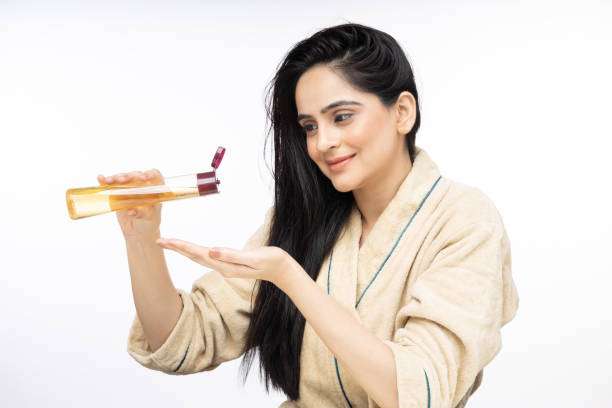
The core lessons learned from the 2000-year evolutionary history
Looking back at the 2000-year evolution of hair oil , several core trends emerge. First, hair oil has evolved from its ancient experiential and ritualistic use to a more scientific, functional, and personalized approach. Second, the wisdom of hair care from different cultures has continuously converged, forming a globalized system of hair care knowledge from India and Africa to the Mediterranean and Europe. Third, the core value of hair oil has expanded from simply improving appearance to include scalp health, hair repair, psychological comfort, and a sense of ritual in daily life. Fourth, modern technology has made hair oil a quantifiable and measurable care product while preserving the essence and aesthetic concepts of traditional culture.
This 2000-year evolution is not only a history of hair care technology development but also a microcosm of humanity’s continuous exploration of nature, health, aesthetics, and the wisdom of life. When choosing hair oil , modern consumers can draw on ancient experience, rely on modern technology, and develop personalized solutions based on their own hair type and living environment to achieve a dual improvement in hair care effectiveness and quality of life.
FAQ
What is the biggest change in
hair oil from ancient times to the present? The biggest change lies in the shift from empirical use to scientific, functional, and personalized customization. In ancient times, hair oil was mainly used for nourishment and ritual, while in modern times, it takes into account repair, protection, smoothing, and scalp health.
Should hair oil be chosen based on cultural traditions ?
It’s not necessary to completely follow cultural traditions, but you can draw inspiration from their scientifically sound ingredients and methods, such as Indian scalp massage, Mediterranean olive oil hair care, and African shea butter for curly hair.
modern hair oil treatments and ancient hair oil treatments have in common?
They both emphasize nourishing and protecting hair, reducing environmental damage and are closely related to lifestyle rituals and aesthetics, reflecting the multidimensional value of hair care.