
Does my hair get worse even though I use the same hair oil all year round?
Many people have this problem: they’ve made it a habit to use hair oil and haven’t bought just any product, yet their hair condition is inconsistent. Sometimes it’s smooth and shiny, and other times it’s oily, flat, and even frizzier than when they don’t use hair oil . The problem isn’t necessarily with the hair oil itself, but with a seriously overlooked variable: the season.
Hair and scalp are not static structures; they constantly adjust their state in response to changes in temperature, humidity, UV intensity, and airflow. Using the same hair oil , the same amount, and the same application time throughout the year is tantamount to assuming that hair remains completely unchanged across the seasons. This assumption itself is the starting point for most hair care problems.
Hair oil isn’t a product that “nourishes hair the more you use it”; it’s more like an amplifier. If used in the right season, it amplifies the stability of your hair; if used in the wrong season, it amplifies the damage the environment does to your hair.
Before understanding seasonal differences, let’s first understand how hair senses its environment.
Although hair is a keratinous structure and lacks sensory capabilities, the scalp possesses a complete neural and sebum regulatory system. Seasonal changes first affect the scalp, and then indirectly influence hair strands through sebum secretion, hair follicle condition, and the rate of moisture loss from the hair surface.
In humid environments, the cuticle layer on the hair surface absorbs water and swells more easily, which may temporarily suppress frizz. In dry environments, the cuticle layer loses water rapidly, increasing its tendency to lift, and even healthy hair will appear rough.
hair oils is to create a controlled oily environment on the hair surface. The need for this oily layer varies depending on the season. If this is ignored, the hair oil can easily turn from a “protective layer” into a “burden layer.”
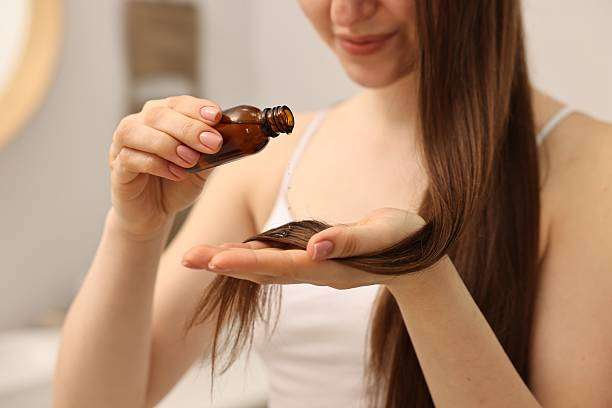
Spring essential oil misconceptions: Ignoring the scalp’s awakening period, excessive oil buildup disrupts the balance.
Spring is often considered a hair-friendly season. Temperatures rise but are not extreme, and humidity is moderate, so hair isn’t as dry as in winter or as oily as in summer. Because of this seemingly stable condition, many people tend to neglect adjusting their hair oil usage in spring.
Springtime is a transitional period for the scalp, moving from low to high activity levels. After the relatively low temperatures and dry environment of winter, sebaceous gland activity gradually recovers, and the sebum secretion rhythm is re-established. During this process, the scalp is highly sensitive to external oil levels.
If you continue using the same nourishing and heavy-duty hair oils you used in winter during spring , you might create a false impression. Your hair will feel smooth immediately after application, but after a few hours it will start to stick to your scalp, the roots will become oily, and you might even experience a slight feeling of stuffiness. This isn’t because your hair suddenly becomes oily; rather, it’s because your scalp’s natural rhythm has been disrupted by external oils during its recovery period.
When using essential oils in spring, the most important thing is not nourishment, but to help the scalp complete a smooth transition. Essential oils that are too heavy or used in large quantities can cause the scalp to misjudge its own sebum status and prematurely start secreting compensatory oils.
summer essential oils : making “anti-frizz” the sole objective.
Summer is the most controversial season for hair oil . Many people simply stop using hair oil entirely in the summer , believing that the high temperatures and sweating are enough to make their hair greasy . But at the same time, summer is also one of the times with the highest risk of hair damage.
High temperatures, strong ultraviolet rays, frequent shampooing, and alternating air-conditioned environments can all accelerate the loss of lipids on the hair’s outer layer. You may feel that your scalp is oily, but the hair itself is in a state of both dryness and damage.
The biggest misconception about hair oils in summer is focusing solely on “anti-frizz” and “refreshing” effects while neglecting their protective function. If you insist on a completely oil-free feel, your hair will actually age more easily under the influence of UV rays and hot air.
The correct approach to hair oil in summer isn’t to avoid it altogether, but rather to change how it’s applied. Hair oil doesn’t need to be noticeable on the hair; instead, use a very small amount to coat the outermost layer of the hair strands, reducing the intensity of direct UV rays on the cuticle.
Using the wrong hair oil in summer often results not in oiliness, but in “pseudo-dryness.” Hair may not feel oily, but it becomes increasingly frizzy and brittle, which is a sign of a long-term lack of lipid protection.

Autumn hair oil trap: focusing only on oil replenishment while ignoring the rhythm of moisture loss.
Autumn is often considered a “repair season.” After experiencing summer damage, many people start using a lot of hair oils in the fall , trying to “restore” their hair. This idea itself is not wrong, but if done improperly, it can easily sow the seeds of winter problems in the fall.
In autumn, air humidity decreases, but temperatures haven’t completely dropped. Hair begins to lose moisture more quickly, but scalp sebum production doesn’t immediately decrease. This imbalance between oil and water is precisely why hair is most prone to being “oily on the surface, dry on the inside” in autumn.
Simply increasing the amount of hair oil used at this stage to solve the dryness problem often only improves the feel, but cannot truly alleviate the internal dehydration. Worse still, the oil covering the surface will further hinder moisture replenishment, making the hair gradually become stiff.
Using essential oils in autumn is more about fine-tuning. They need to be used in conjunction with moisturizing, not solely for repair. The role of essential oils should be to lock in moisture, not to replace it.
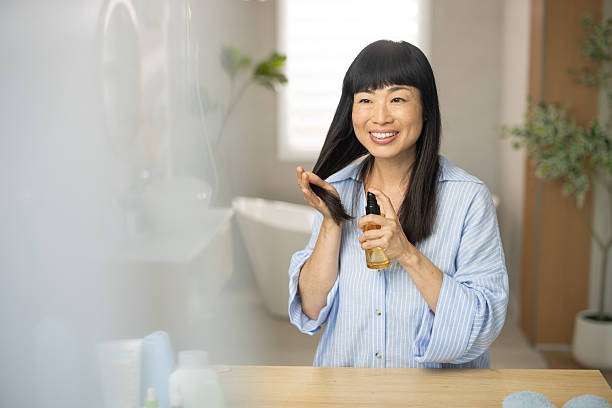
Winter hair oil misuse: Hidden damage caused by over-nourishment
Winter is the season when hair oil usage is most likely to “go out of control.” Cold, dry, and frequent static electricity make essential oils almost a necessity. Many people significantly increase their usage in winter, but they overlook a crucial issue: the scalp and hair’s metabolic capacity decreases at low temperatures.
In winter, scalp sebum secretion decreases, hair follicle activity decreases, and the rate of oil renewal on the hair surface slows down. This means that if excessive hair oil is used , it will remain on the hair and scalp surface for a longer period of time.
In the short term, your hair will appear unusually smooth, but in the long run, this heavy covering may actually increase the burden on your scalp and affect normal metabolism. You may not feel discomfort immediately, but you will find that your scalp condition has worsened in late winter and early spring, with uncontrolled oil production or increased sensitivity.
The real challenge with essential oils in winter isn’t whether to use them or not, but rather to use them “slowly.” Reducing the frequency and the amount used each time is more important than simply increasing the nourishing effect.
The underlying principles of hair oil that can be used year-round but are rarely followed
Regardless of the season, hair oil should not be considered a “fixed routine.” It’s more like a tool that requires constant fine-tuning. Hair condition changes faster than we imagine, and hair oil is precisely the part that’s most easily overlooked for adjustment.
The truly mature way to use essential oils is to dynamically adjust the dosage, frequency, and intensity according to seasonal changes. Smoothness is not the goal; stability is.
When you begin to realize that hair oil is not the main component of hair care, but rather a buffer layer between the environment and your hair, then seasonal hair care truly begins to become controllable.
Why does using the wrong hair oil in the wrong season damage your hair more than not using it at all?
Without hair oil , hair experiences only a single environmental stressor. Using the wrong hair oil , however, amplifies that environmental stressor. Oil prolongs the time heat remains on the hair, alters moisture exchange pathways, and affects the scalp’s perception of external stimuli.
This is why some people, despite their diligent hair care efforts, end up making their hair worse. The problem isn’t a lack of effort, but rather using the wrong methods.
Understanding the changing seasons is essentially about respecting hair as a “living system.” Once you start adjusting to the seasons instead of forcibly fighting against them, hair oil can truly become an aid to hair care, rather than a burden.
FAQ
my hair oil throughout the year ?
It’s not necessary to change products, but you do need to adjust the dosage, frequency, and timing of use. The same essential oil can produce completely different effects in different seasons.
Is it better to
completely stop using hair oil in the summer? Not necessarily. Hair still needs lipid protection in the summer, but it needs to be used in very small amounts and in a lighter form. Completely stopping use may actually accelerate damage.
What should I do if my hair is particularly unstable during seasonal changes?
This is normal. The most important thing during seasonal transitions is to reduce irritation and decrease the intensity of essential oil use, allowing the scalp and hair time to adjust themselves.