
In most people’s minds, hair oil and hairspray seem to be at opposite ends of the styling world. One is responsible for shine, smoothness, and texture, while the other is responsible for strength, support, and hold. As a result, many people either only use hair oil , resulting in a “greasy hair disaster” that collapses after less than half an hour, or only use hairspray, which holds the hairstyle but makes it look like they’re wearing a hard-shell helmet, so stiff that even facial expressions seem superfluous.
Those who truly understand styling know that hair oil and hairspray are not opposing forces, but rather a well-coordinated pair. However, this combination is never a simple matter of “applying them together,” but rather a logical, orderly, and proportional systematic process.
This article doesn’t delve into the obvious online techniques like “oil first, then gel” or “apply in small amounts multiple times.” Instead, it breaks down the reasons why using hair oil and gel together can achieve long-lasting hold without collapsing, becoming oily, or dirty, by examining three key aspects: hair structure, the source of hold, and the distribution of oil. You’ll understand that the real secret lies not in the products themselves, but in your understanding of your hair.
Part 1: The true division of labor between hair oil and hairspray is misunderstood by most people.
Before delving into the so-called “secret techniques,” a crucial misconception must be corrected. Many people believe that hair oil makes hair smooth and hairspray holds it in place, so they naturally assume that treating hair oil as “base makeup” and hairspray as “setting spray” solves the problem. However, the reality is quite the opposite. Hair oil actually affects the hair’s malleability, while hairspray controls its structural stability.
Hair isn’t made up of completely independent strands; rather, it’s connected to each other through friction between the cuticles on its surface. When hair is dry and the cuticles are open, uneven friction causes the hair to become frizzy, unruly, and difficult to manage. The primary function of hair oil isn’t to create shine, but to fill the gaps between the cuticles, allowing each hair to adhere to each other within a controlled range. This adherence determines how easy it is to style your hair later.
Hairspray is completely different. It doesn’t care if your hair is smooth or not; it only cares about creating a sufficiently stable “structural network” on top of your already styled hair. Once dry, hairspray forms a very thin polymer film on the hair surface, locking the hair in place. If the underlying hair is unruly, hairspray will simply permanently fix that unruly style, resulting in oily, flat, and messy hair.
Once you understand this, you’ll realize that using hair oil and hairspray essentially involves two different stages of work. One is responsible for making the hair “obedient,” and the other is responsible for making the style “stand.”

The second part of the secret technique is not about applying oil first and then glue, but rather about structure first and then texture.
hair oil and hairspray for the first time will naturally use hair oil to smooth their hair first, and then use hairspray to fix it. This approach is not entirely wrong, but it ignores an important issue: if too much hair oil is used on the surface of the hair, it will directly weaken the adhesion of the hairspray.
The truly effective order is to first establish the structure, and then refine the texture. In other words, you need to first use hairspray to define the general direction and support framework of your hair, and then use hair oil to adjust the details and shine.
This logic might sound counterintuitive, but it aligns perfectly with the laws of physics. Hairspray needs to directly contact the hair surface to form a stable hold. If you first apply a layer of oil to the hair surface, the hairspray will be isolated and unable to adhere evenly. It will simply float on top of the oil, resulting in a stiff look immediately after spraying, but after a while, it will collapse and become noticeably oily and shiny.
The correct approach is to use a small amount of hairspray to define the direction at the roots when your hair is about 80% dry. This step focuses on structure, not detail. For example, is the parting clear? Is the overall style more voluminous or flat? Are the bangs styled upwards or to the side? Once this “skeleton” is established, take a very small amount of hair oil , rub it thoroughly in your palms, and gently glide it from the mid-lengths to the ends to eliminate dryness and add definition and natural shine.
The result of this is that the hairspray firmly controls the hair roots and structure, while the hair oil only works on the surface, without compromising the hold and therefore not appearing oily.
Part Three Secret Technique Two: Hair oil isn’t applied to the hair, but rather into the air.
Many people fail when using hair oil , and the root cause isn’t the product itself, but how it’s applied. The most common mistake is treating hair oil like hand cream, pressing it directly onto the hair. The result is often a few sections of hair that are shiny with oil, while other areas remain dry, making the overall look dirty and messy.
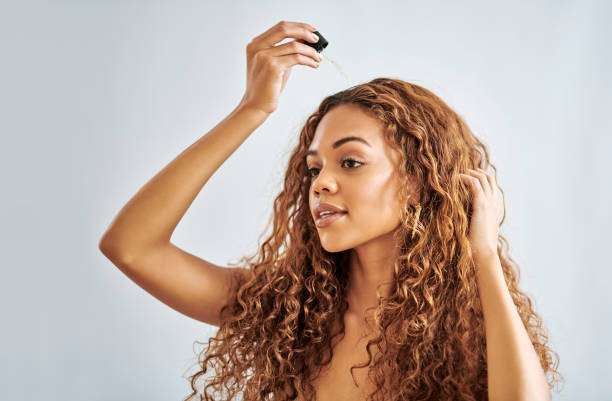
The truly professional way to use hair oil is to apply it “indirectly” to the hair. This concept may sound abstract, but it’s very simple to do. What you need to do is completely emulsify the hair oil between your hands, letting it spread out in the air, rather than concentrating it in one spot. The optimal time to apply it to your hair is when you can barely feel any oil in your hands.
After evenly distributing hair oil in your palms , don’t grab the top of your head directly. Instead, start from the ends and gently comb through your hair with your fingertips. The purpose of this action is to moisturize the ends of your hair, which are the driest and most in need of oil, first, while the roots will only receive a very small amount of hair oil at the end . In this way, the top of your head won’t fall flat, while the ends will remain smooth and shiny.
With the hairspray having already set the structure, this method of “dispersing hair oil in the air ” makes the style look very clean, without any obvious product residue, yet still full of texture. This is also what many people are puzzled by when looking at celebrity street style photos—their hair is shiny and well-defined, yet doesn’t look greasy at all; this is the reason.
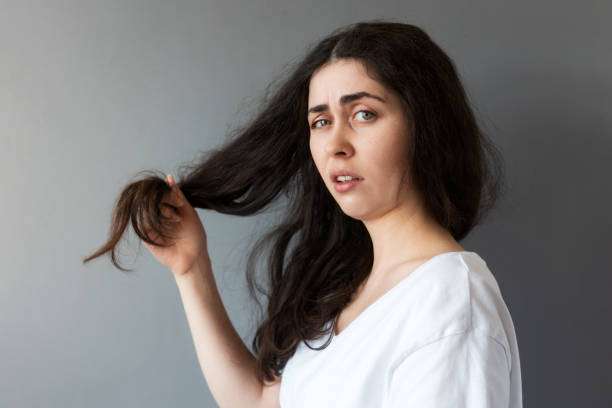
Part Four Secret Tip 3: Use hairspray to create volume, not to fix the hair itself.
When it comes to hairspray, most people picture their hair completely still. But in the combination of hair oil and hairspray, what the hairspray is really trying to fix is not the hair itself, but the “air structure” formed between the hair strands.
Once hair is styled smooth enough with hair oil , tiny gaps will naturally form between the hair strands. These gaps are key to a hairstyle that looks voluminous, layered, and doesn’t look flat. The job of hairspray is to lock these gaps in place without compressing them.
Therefore, the distance and angle when spraying hairspray are crucial. Spraying too close will only wet certain areas of hair, causing it to lose its volume and eventually fall flat. The correct way is to spray lightly in a mist-like manner from a distance of 20 to 30 centimeters from the hair, allowing the hairspray to fall onto the surface of the hair like an invisible net, rather than directly soaking into the hair strands.
When hairspray is used in this way, it doesn’t make the hair stiff, but rather keeps the style elastic. You can gently tousle the hair with your hand, and it will still move, but once you let go, it will return to its original shape. This “movable but not messy” state is the ultimate goal of combining hair oil and hairspray.
Part 5: Why this combination stays fresh and greasy all day?
Once you truly master these three techniques, you’ll notice a very significant change: your hair becomes increasingly stable. It no longer relies on constant touch-ups; instead, it achieves a self-balancing process.
This is because hair oil only improves the physical condition of the hair, making it smooth and flexible, while hairspray only locks in the structure and does not affect the texture. Each has its own function and does not interfere with the other, so there will be no problems with oil buildup or loss of hold.
More importantly, this combination is very economical with products. Less hair oil is needed, reducing the burden on the scalp and actually slowing down oil production. Hairspray doesn’t need to be layered repeatedly, and there won’t be white flakes or clumps in the hair. Over time, you’ll find that your style not only lasts longer, but your hair’s overall condition also improves.
In conclusion, true long-term effectiveness comes from understanding, not from simply piling things up.
hair oil and hairspray together is never just a simple combination of techniques; it’s about understanding hair structure. Once you understand that hair oil addresses controllability “before styling,” and hairspray addresses stability “after styling,” you’ll stop worrying about brands, prices, or trends.
The real secret is never written in the product instructions, but hidden in the details of every styling session you take. When you begin to respect the natural physical logic of your hair, long-lasting, non-flat, and non-oily results are no longer luck, but an inevitable outcome.
FAQ
Question 1: Will using hair oil and hairspray together cause more damage to hair?
As long as the amount used is reasonable and the order is correct, combining hair oil and hairspray will actually reduce damage to the hair. This is because hair oil reduces friction on the hair, naturally reducing the amount of hairspray needed, resulting in less overall residue.
Question 2: Is this combination suitable for fine, soft hair?
Fine, soft hair is especially suitable for this combination. The key is to use very little hair oil , only on the ends and surface of the hair, and concentrate the hairspray on the root area to effectively prevent the hair from falling flat.
Question 3: Will it be difficult to wash my hair clean at night?
When using the product as described in the article, the layers are clearly defined and won’t accumulate on the scalp. A normal shampoo is sufficient; there’s no need to use a strong-cleansing shampoo.