
With modern people placing increasing emphasis on hair care, hair oil has become an important part of styling. Whether it’s to add shine, repair frizz, or address dryness and damage, hair oil plays an irreplaceable role.
hair oils on the market, choosing the one best suited to your hair type can be a confusing issue for many. To select the most suitable hair oil , you first need to understand your hair type, the ingredients and functions of different hair oil, and the best way to use them in your daily life.
Part 1: Understanding Your Hair Type
Before choosing a hair oil, the most important first step is understanding your hair type. Different hair types have different needs, and understanding your hair characteristics is the foundation for choosing the right hair oil. Generally speaking, hair types can be roughly divided into oily, dry, normal, fine, and damaged types. Each hair type has different needs for hair care products.
People with oily hair typically have a scalp that produces more oil, making their hair greasy easily. This type of hair needs a lightweight, non-greasy hair oil to avoid exacerbating the greasiness. Overly moisturizing hair oil can make hair appear even greasier and heavier, so choosing a light and refreshing hair oil is especially important.
In contrast, people with dry hair often lack moisture, making their hair prone to dryness, frizz, and even breakage. For this type of hair, moisturizing hair oil is the best choice, as it can help restore shine, increase moisture, and make hair softer and more elastic.
People with normal hair are relatively lucky because their hair is neither too oily nor particularly dry. Those with normal hair can choose multi-functional hair oils that maintain shine without making their hair greasy or heavy.
Fine, soft hair typically has less volume and finer strands, making it prone to lying flat against the scalp and appearing limp. For this type of hair, a lightweight hair oil is recommended to avoid excessive moisture that could weigh down the hair and reduce its volume.
Finally, damaged hair is caused by factors such as dyeing, perming, and environmental factors, resulting in dryness, brittleness, and even split ends. For damaged hair, deep-repairing hair oil is the most suitable option, as it can help repair damaged hair strands and restore hair to health.
Part Two: Main Ingredients of Hair Oil
Once you understand your hair type, choosing the right oil ingredients becomes crucial. The effectiveness of oil is directly related to its ingredients, and different ingredients have different benefits. Many essential oil ingredients are commonly found on the market, some of which are natural and highly favored for their excellent nourishing and repairing properties.
Argan oil is a very popular hair oil ingredient, rich in fatty acids, vitamin E, and antioxidants. It deeply nourishes hair and repairs dryness and frizz. Argan oil has a significant moisturizing effect, making it especially suitable for people with dry or damaged hair. It can bring volume and enhance shine to hair.
Coconut oil is a natural moisturizing ingredient, rich in fatty acids and vitamin E, which deeply nourishes hair and increases its elasticity. Its lightweight nature makes it suitable for most hair types, especially dry and damaged hair. It effectively improves hair shine and prevents dryness and split ends.
Jojoba oil is a natural oil very similar to sebum, which can gently nourish oily hair. A key characteristic of jojoba oil is that it doesn’t make hair greasy, making it ideal for people with oily hair. It regulates scalp sebum secretion, keeping hair feeling fresh while also increasing shine.
Grapeseed oil is a rich source of antioxidants, making it suitable for oily hair. It helps regulate sebum production while also providing antioxidant protection against environmental damage. Its lightweight texture adds a natural shine to the hair.
Sweet almond oil is a common multi-purpose essential oil ingredient. Rich in vitamins A, B, and E, as well as fatty acids, it’s suitable for all hair types, especially fine and soft hair. It provides ample moisture, keeping hair soft and smooth.
Different hair oil ingredients are designed for different hair types, so when choosing hair oil , you should select the appropriate ingredients based on your own hair type.

Part Three: Functional Positioning of Hair Oil
oil has a wide range of functions, and there are many different essential oil products on the market to meet various needs. Choosing the right essential oil requires not only looking at its ingredients but also considering its intended function. Different essential oils can satisfy the needs of different people.
Some hair oils have deep repair properties, making them suitable for people with damaged hair. Factors such as dyeing, perming, sun exposure, and daily environmental pollution can all damage hair, making it crucial to choose a hair oil with repairing properties . Repairing hair oils typically contain rich nourishing ingredients, such as argan oil and coconut oil, which effectively repair hair damage, restoring smoothness and shine.
Anti-frizz oil is suitable for people with tangled or frizzy hair. Frizzy hair not only looks messy but also lacks shine. Anti-frizz hair oil helps balance the hair’s oil and moisture levels, locks in moisture, improves smoothness, reduces static, and makes hair more manageable.
Shine-enhancing hair oils primarily work by increasing hair’s shine, making it appear healthier and shinier. These oils typically contain lightweight ingredients such as jojoba oil and grapeseed oil, making them suitable for those who want to enhance their hair’s shine.
Oil-control hair oil is suitable for people with oily hair. People with oily hair have excessive sebum secretion on their scalp, making their hair look greasy. Oil-control hair oil can regulate sebum secretion on the scalp, keeping the hair clean and non-greasy.
In addition, some essential oils have heat-protective properties, making them suitable for people who frequently use heat-generating tools such as hair dryers and straighteners. Heat-protective essential oils can form a protective film in high-temperature environments, preventing damage to the hair from hot air or heat-generating tools.
Choosing the right type of essential oil based on your individual needs will bring better skincare results.
Part Four: How to Use Oil
the oil best suited to your hair type , proper application is still crucial. Different hair oils require different application methods. Most hair oils are recommended for use on wet or dry hair, but the method and amount used should be adjusted flexibly according to hair type and volume.
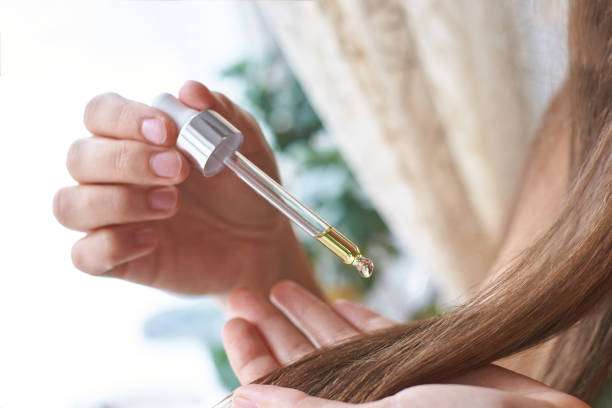
For those with dry or damaged hair, using oil on wet hair helps retain moisture better. After shampooing, gently towel dry your hair and apply the hair oil evenly to the ends and mid-lengths, avoiding the roots to prevent a greasy feel. Using hair oil on wet hair not only increases softness but also makes the hair smoother and prevents frizz. Oil can be applied to dry hair . A small amount of hair oil can increase shine without making the hair look greasy. When using it, drop a few drops of hair oil into your palm, rub it gently, and then apply it evenly to the ends and mid-lengths of your hair.
If you are used to using heat tools such as hair dryers or straighteners, it is recommended to choose hair oil with heat protection. Applying the hair oil to damp hair before blow-drying can effectively protect the hair from heat damage and form a protective film after the hair is dried, keeping the hair smooth and shiny.

Part 5: Precautions when choosing essential oils
There are a few things to keep in mind when choosing and using essential oils . First, essential oils should not be used excessively, as too much oil can make hair appear greasy, especially for people with oily hair. Using the right amount ensures that the effects of the essential oil are not masked by excessive oiliness.
Secondly, essential oils should primarily be applied to the hair shaft, avoiding direct contact with the scalp. The scalp naturally produces oil, and excessive use of essential oils may lead to excessive oil production and even scalp problems.
Additionally, pay attention to the ingredients when choosing oil . Some hair oils on the market contain silicone oil, which can make hair look smooth, but long-term use may lead to build-up and hair follicle buildup. Therefore, it is recommended to choose silicone-free hair oil to maintain the natural health of your hair.
Choosing different essential oils according to seasonal changes is also a good habit. In the humid summer, you can choose essential oils that control oil and frizz ; while in the dry winter environment, moisturizing essential oils are more suitable for meeting the needs of your hair.
Conclusion
hair oil for your hair type is a crucial step in achieving perfect hair care. By understanding your hair type, the ingredients and functions of the oil , and using it correctly, you can achieve healthier, shinier hair. Each hair oil has its unique effects, and choosing the right one is the first step to making your hair shine. Hopefully, this article will provide helpful guidance for choosing hair oil and help you achieve healthy and beautiful hair.