
Of all styling product combinations, hair oil and hairspray are probably the most likely to cause a “mishap”. Many people simply want their hair to be more styled and last longer, but end up with flat, shiny hair that looks like it just came out of the kitchen. As a result, hair oil is criticized for being “too oily”, and hairspray is complained about for being “too harsh”, leading to the conclusion that these two products should never be used together.
But the reality is quite the opposite. A truly professional, clean, and timeless style almost always requires the combination of both. The problem isn’t with the products, but with the logic of their use. Hair oil and styling spray aren’t meant to overlap; they’re meant to work together. If their roles are confused, a greasy, disastrous result is almost inevitable.
This article aims to thoroughly break down the combination of hair oil and styling spray. It won’t simply tell you “which to use first and which to use later,” but rather explain why many people fail at this combination, starting from the fundamental logic of hair structure, oil distribution, and how the spray forms a film. It will also explain how to use five key techniques to turn this “high-risk combination” into a “high-success-rate solution.” Once you understand this logic, even beginners can consistently avoid oily areas.
Part 1: Why does using hair oil and hairspray so easily lead to problems?
Before understanding the techniques, you must first understand one question. Why is it that hair oil works fine on its own, and hairspray works fine on its own, but problems arise when they are used together?
The reason lies in the fact that these two products function at completely different levels. The core function of hair oil is to reduce friction between hair strands, making the hair easier to style. It changes the “controllability” of the hair. The core function of styling spray, on the other hand, is to form a very thin, fixed film on the hair surface, locking in the already formed structure. It changes the “stability” of the hair.
The problem is that most people use hair oil as a “styling product” and hairspray as a “fixative product.” As a result, too much hair oil is applied, and it’s placed too high up in the hair. The hairspray only coats the oil and doesn’t actually adhere to the hair structure. While it may seem to hold its shape while spraying, after a while, the oil moves, causing the entire structure to collapse and creating an unpleasant shine.
The key to truly non-greasy food combinations is not using fewer products, but ensuring that each product does its proper function.
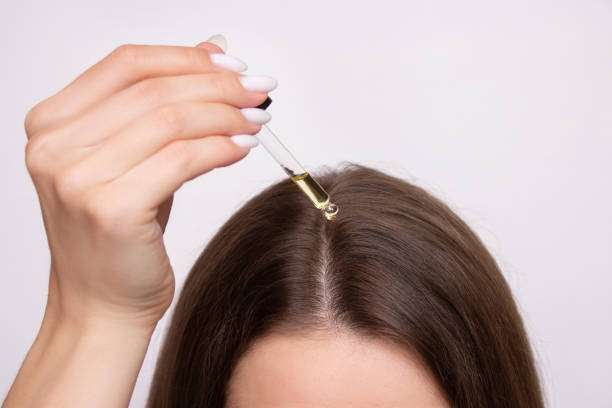
Part Two, Tip 1: Hair oil should only be used in the “first half” of the shaping process.
many people make when using hair oil is applying it too late. If your hair is already dry and styled, applying hair oil at this point is basically like pouring oil directly onto a finished product, and the chances of it turning out badly are extremely high.
The correct logic is that hair oil only participates in the first half of styling. That is, it should be applied when the hair is “about to be styled, but not yet set.” The ideal time is when the hair is 70-80% dry, or when the basic direction has been completed, but before the final setting.
At this stage, hair oil ‘s role is to make hair smooth and controllable, making it easier to adjust the direction with your hands or a comb. It doesn’t fix the style, but rather helps the style to be better “presented”.
hair oil after styling spray , you’ve basically entered a danger zone. The truly safe approach is to complete all the necessary hair oil application before spraying .
Part Three, Technique Two: Apply hair oil only to the surface, not the core structure.
The so-called structural core refers to the hair roots and supporting area. This determines whether a hairstyle can hold up and how long it can hold up, and it’s also the area most susceptible to oiliness.
Many greasy hair mishaps are essentially caused by hair oil seeping into the hair roots. Even a small amount, if applied incorrectly, can cause hair to quickly lose its support. This is especially true for fine, soft hair, where even a little oil is enough to make the roots stick directly to the scalp.
The correct approach is to use hair oil as a “surface finishing tool.” It should only be applied to the mid-lengths and ends of the hair to refine lines, reduce frizz, and create a natural shine. The roots should, in principle, be reserved only for blow-drying and styling spray.
When you use hair oil , if your fingers touch your scalp, it’s a good indication that you’re using too much or using it incorrectly. A truly clean hair oil application will leave your scalp feeling “unnoticeable.”

Part Four, Technique Three: Hairspray is applied to the air, not the hair.
Many people unconsciously stand very close when spraying hairspray, afraid that the spray won’t stay on. This spraying method is one of the main culprits causing clumping, shine, and sagging.
What hairspray is really trying to fix isn’t the hair strands themselves, but rather the structural relationship between the strands. In other words, it’s about locking in that “airy” feel. If you spray it too close, the spray will directly wet the hair, destroying its original voluminous structure, and even if you used hair oil sparingly beforehand, it will instantly collapse.
When styling hair, the correct method is to first maintain a certain distance from the hair. This distance needs to be just right—not too close, not too far. If too close, the spray won’t spread sufficiently; if too far, the spray may become too dispersed and won’t achieve the desired effect. After maintaining this distance, allow the spray enough space to fully diffuse in the air. As the spray continues to disperse in the air, it gradually forms a fine mist. This misty spray, like light clouds, gently and slowly settles on the surface of the hair.
When the spray is applied to the hair in this way, the resulting styling film is very even. It doesn’t concentrate on a few points on the hair, preventing areas from being over-sprayed while others are barely sprayed. If the spray is concentrated in a few spots, it can easily mix with the hair’s natural oils, creating a so-called “oil film buildup.” Using the correct spraying method naturally avoids this undesirable situation.
When the hairspray falls evenly like an almost invisible net, it achieves excellent hold. On one hand, the hair retains its elasticity, preventing it from becoming stiff and rigid, allowing it to move naturally. On the other hand, the hair maintains its neat and tidy appearance for a considerable period. Whether undergoing daily activities or being affected by external environmental factors, the hair retains its original style. This is what constitutes a mature and satisfying styling result.
Part Five, Technique Four: First, determine the shape; then, check; then, make localized repairs.
Many product failures aren’t caused by a single step, but by repeated modifications. One coat of paint isn’t enough, so you paint it again; a little bit isn’t smooth enough, so you add more. The result is a product with layers upon layers of problems, inevitably leading to a loss of control.
The correct process should be completed in stages. First, use hair oil to complete all the shaping work, and then apply the setting spray all at once. After spraying, do not immediately manipulate the hair with your hands; instead, allow the spray some time to form a film. Once the structure has stabilized, visually inspect the overall condition.
If adjustments are truly needed in certain areas, extreme restraint is essential. It’s better to make minor tweaks than to start from scratch entirely. Many seemingly sophisticated designs are actually achieved by “stopping early.” Stopping before things go wrong is itself a skill.

Part Six, Tip Five: The greasy feeling is often not caused in the moment.
A frequently overlooked fact is that much of the greasiness doesn’t appear immediately after styling, but rather gradually develops over several hours. This is why some people feel perfect when they leave home in the morning, only to start questioning their existence by the afternoon.
The reason is that hair oil and scalp oil move over time. If you use too much at the beginning, or apply it close to the roots, these oils will gradually spread downwards with body temperature and activity, mixing with the film formed by the hairspray, eventually resulting in a shiny, flat appearance.
The truly prudent approach is to leave room for “subsequent changes” from the outset. Use less hair oil and a lighter touch of styling spray. As long as the initial condition is clean, subsequent changes will appear more natural, looking like the hair’s natural shine rather than product residue.
Part 7: In the long run, proper matching can actually save on products.
Many people believe that to avoid oily hair, they need to constantly switch to lighter products. But in fact, once you understand the logic behind using hair oil and styling spray, you’ll often end up using less and less.
Because hair oil only appears where it’s supposed to, and styling spray only serves to lock in the structure, the two no longer “correct” each other. The styling process is shorter, fewer adjustments are needed, and product consumption naturally decreases. Hair is actually more stable and easier to manage the next day.
In the long run, this combination is less burdensome on the scalp and hair, truly achieving a balance between looking good and being comfortable.
In conclusion, the problem with the product’s “greasy” or “unappealing” quality is not a product issue, but a logical one.
hair oil with styling spray is not just for advanced users, but a set of strategies that can be learned and replicated. When you stop using hair oil as a styling tool and styling spray as a fix, and instead let them each do their job best, the possibility of a greasy mess almost disappears.
A truly good style isn’t about quantity, but about quality. Understanding is more important than technique; restraint is more sophisticated than piling on.
FAQ
Question 1: Will using hair oil and styling spray together damage hair more?
As long as the amount is reasonable and the application is correct, using both together will not increase damage. On the contrary, it can reduce repeated styling and pulling, making it more hair-friendly.
hair oil and mist
unsuitable for fine, soft hair? Hair oil and mist are indeed suitable for fine, soft hair, but the amount and application method are more critical. Hair oil should only be applied to the ends and surface of the hair, while mist should be applied lightly from a distance to actually improve support.
Question 3: If I’ve already accidentally used oil, can I fix it?
You can try gently pressing the oily area with a clean tissue to absorb the excess oil, and then use a very small amount of hairspray to re-lock the structure. However, the effect depends on the degree of oil buildup. Prevention is always more important than cure.