
To be honest, in my daily work, what I see most often is not “lack of styling skills,” but rather “using hair oil in a way that creates hair problems.”
Some people apply a large pump of hair oil directly to their scalp while their hair is still wet after washing; others, in pursuit of shine, repeatedly apply hair oil as a styling product; and still others complain about the oiliness of essential oils while insisting on applying it from the roots, ultimately concluding that “essential oils isn’t suitable for me.”
These problems reappear almost every day, and what I find truly regrettable is that they don’t stem from poor hair quality, a low budget, or inferior products, but from a fundamental misunderstanding: most people have misunderstood the role of hair oil in hair care from the very beginning.
Hair oil is not a “miracle repair liquid,” nor is it a “high-end styling product”; it’s more like a precision tool. If used incorrectly, the tool itself becomes a variable that hinders effectiveness. This is why the same hair oil can produce vastly different results for different people.
I. Recurring Mistakes: Why Your Hair Gets Worse the More You Use Hair Oil
In all the consultations about hair oil, one common phenomenon is very evident: the problem is often not that “essential oils is ineffective,” but that “essential oils is being applied in the wrong place and order.”
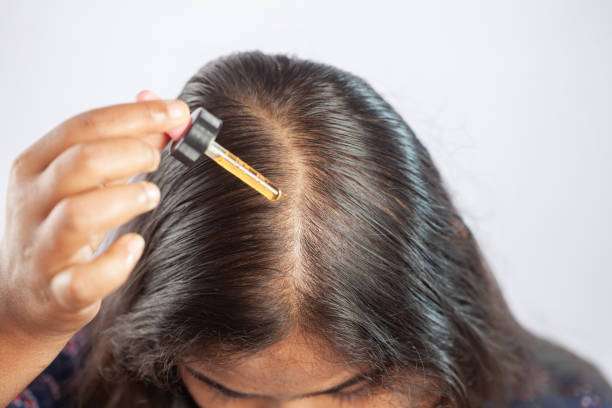
The most typical mistake is applying it from the roots. Many people subconsciously believe that hair care should “start from the roots,” but when it comes to hair, this logic is completely reversed. The root area is close to the scalp and already has a complete sebum secretion system; it doesn’t lack oil, but rather needs ventilation, balance, and a feeling of freshness. When hair oil is incorrectly concentrated at the roots, the scalp environment is artificially disrupted, leading to flat hair, increased oiliness, and even a loss of support at the roots.

Another common mistake is using hair oil as a styling product. In pursuit of smoothness or shine, some people repeatedly apply essential oils after styling, resulting in hair that looks heavy and greasy instead of sophisticated, completely eliminating the original layered look. This isn’t because the essential oils is “low quality,” but because it’s being forced to perform tasks it wasn’t designed for.
Another, more subtle problem arises from seemingly restrained usage. Some people use very little oil and apply it gently, but their application method is random, applying it wherever the hair feels dry, lacking an overall strategy. While this might seem fine in the short term, in the long run, it leads to localized oil buildup and uneven hair texture, resulting in very inconsistent shine and smoothness.
Behind these mistakes lies a single core problem: a lack of understanding of the true limitations of hair oil.
II. Let’s clarify: What is hair oil for, and what is it not for?
If I had to define the essence of hair oil in one sentence, I would say it’s a “hair surface condition management tool.”
It manages friction, shine, smoothness, and the rate of moisture loss, not volume, hold, or strong styling.
Structurally, the area of the hair that truly needs care is from the mid-shaft to the ends. This area is far from the scalp and lacks natural sebum supply. Once the cuticle is damaged, moisture is quickly lost, leading to frizz, split ends, and dryness. The role of essential oils is to form a controllable protective film in these areas, reducing friction and slowing down moisture evaporation, allowing the hair to return to a more stable state.
Because of this, the effectiveness of hair oil highly depends on the “application path” and “timing.” If the application goal is misplaced, such as trying to use hair oil to solve flat hair problems or expecting it to style like hair wax, the result will inevitably be disappointment.
Understanding this, the so-called “correct application method” is no longer just a technique, but a logical sequence that conforms to the structure of the hair.
III. The underlying logic of the three-step correct hair oil application method, not just the surface actions
The reason I emphasize “three steps” is not to create a sense of ritual, but because hair from root to tip has distinct functional zones. Ignoring this makes any hair care a random act.
Step One: Hair Oil Should Never Start at the Roots
This is the most important step, and also the one most easily overlooked.
Before applying hair oil, it should be thoroughly spread in the palms of your hands, allowing your body temperature to make the texture more even. Then, avoid the root area and start applying the oil from the mid-lengths of your hair.
The reason is very simple. The mid-lengths of the hair are where sebum supply begins to become significantly insufficient, and it’s also the area most frequently subjected to friction. Collars, shoulders, and backpack straps constantly wear down the integrity of the cuticle in this area. Applying the hair oil here first allows it to provide protection without damaging the scalp environment.
Many people worry that this will result in uneven application, but on the contrary, hair oil doesn’t aim for complete coverage, but rather precise application to functional areas.

Step Two: The Ends Are Important, But Not a Place for Accumulation
The ends of the hair are indeed the area that needs the most care, but this doesn’t mean they should be overloaded with hair oil.
The correct approach is to follow the direction of the hair strands, bringing the oil already on your hands to the ends, rather than adding more.
The cuticle at the ends is the thinnest and most sensitive to oil. If the amount used is uncontrolled, it will result in hair that “looks shiny but feels greasy.” This false repair makes people mistakenly believe their hair is in better condition, but a few hours later, the hair strands will be more likely to attract dust, and the texture will rapidly deteriorate.
Truly effective hair end care results in hair that is visually shiny and elastic to the touch, not coated in an oily film.
Step Three: Only Residual Oil Should Approach the Roots
This is a step many people have never realized.
After completing the main application to the mid-lengths and ends, if there is still a barely perceptible oily residue on your palms, then you can gently apply it to the outermost, surface layer of the hair roots.
Note that this is not “re-application,” but rather using the residue to create a surface balance. Its purpose is not to add more oil, but to make the overall shine more uniform, avoiding a layered effect where the lower half is shiny and the upper half is dry.
If you can still feel a noticeable oiliness on your palms at this step, it means you’ve used too much in the previous two steps, and you should stop rather than continue trying to “fix” it.
IV. Why Do Different Hair Types Respond Differently to the Same Three-Step Method?
Some people say that they followed similar methods, but the results weren’t as good as others. This isn’t surprising, because hair type itself is an amplifier.
The problem with fine, soft hair is never that “hair oil isn’t suitable,” but rather that it has a very low tolerance for the amount and texture of the product. Even a little excess will immediately result in flat, limp hair. However, as long as the three-step logic is sound and the amount used is controlled, hair oil can actually improve common problems like static and frizz in fine, soft hair.
Coarse, thick, or naturally curly hair is more receptive to essential oils, but it’s also easier to fall into the trap of “the more the better.” Once essential oils starts to replace moisture and basic conditioning, the hair will gradually become dependent on the oil film, and its true elasticity and structure will be masked.
Damaged hair is most prone to misinterpreting the effects. Hair oil can quickly improve appearance, but it addresses surface problems, not structural repair. If you mistake short-term improvement in feel for long-term repair, your hair care approach will go completely off track.
V. The Most Common Pitfalls for Beginners and Blind Spots for Advanced Users
For beginners, the biggest problem is mistaking the “application process” for “hair care itself,” neglecting the preceding conditions, such as the dryness or wetness of the hair, and whether there are any other styling products already present. Hair oil is always a “later stage” product; it cannot compensate for the lack of prior conditioning.
The most common blind spot for advanced users is the excessive pursuit of control. They understand sectioning and order, but they start to constantly layer products, hoping that essential oils will perform multiple functions. In this case, the problem is often not a lack of technique, but too many goals.
A truly mature approach to using essential oils is knowing exactly where it should be applied and where it should stop.
VI. Turning the Three-Step Method into a Long-Term Effective Usage Logic
When you truly understand the cause-and-effect relationship behind these three steps, hair oil will no longer be a product you repeatedly struggle with, but rather an integral part of your overall hair care system.
You will know when you need it and when you should let your hair remain in its natural state.
Start from the mid-lengths, end at the tips, and use the remaining amount to achieve overall balance. This isn’t a technique, but a way of respecting the hair’s structure.
When essential oils is used in its proper place, hair care will truly begin to be effective. Conclusion: The right method should make things easier for you over time.
A good hair oil experience shouldn’t make you constantly wonder “am I using it wrong again?”, but rather gradually reduce your anxiety.
When the logic is clear and the process is consistent, improved hair condition becomes a predictable outcome, not a matter of luck.
This is the true purpose of hair oil.
FAQ
Q1: Why do many people find their hair becomes oilier after using hair oil?
In most cases, it’s not the essential oils itself that’s the problem, but rather applying it too close to the roots, or repeatedly layering the oil like a styling product, disrupting the balance between the scalp and hair.
Q2: Is essential oils more effective on wet or dry hair?
Hair oil is more suitable as a treatment used in the middle to later stages of hair care. Using it on semi-dry or dry hair makes it easier to control the amount and distribution, preventing excessive oiliness.
Q3: Will using essential oils daily make my hair dependent on it?
Hair oil won’t make your hair “dependent,” but incorrect usage can mask underlying hair problems. As long as you understand its limitations and use it appropriately, it won’t affect your hair’s long-term condition.