
Why do most people have serious misunderstandings about hair oil’s “composition repair”?
As a hair care professional who has long been involved in hair quality issues, product formulations, and real user feedback, I hear similar questions almost every day: Why does my hair only look temporarily smooth after using a hair oil that claims to “repair,” only to return to its original state after washing? Why do some hair oils have very luxurious ingredient lists, yet still fail to solve dryness, split ends, and frizz? Some people even find that their hair becomes increasingly flat and sticky after frequent use of so-called “high-repair” hair oils.
These problems are not accidental but stem from a cognitive bias that has been amplified by marketing over a long period of time: many people equate “the presence of ingredients” directly with “ingredient repair” and mistake “high-end name” for “real effect,” while ignoring the true boundaries of the role of hair oil in the hair care system.
Before delving into the specific ingredients, it’s essential to clarify a fundamental fact: hair oil isn’t designed to fundamentally rebuild broken hair structures. It cannot reverse existing keratin loss, nor can it truly heal split ends. The real value of hair oil lies in its combination of ingredients, which creates a controllable, stable, and physically compliant protective and management system between the hair surface and fibers. This system determines the “rate of damage” to hair from daily friction, heat styling, and environmental stimuli, rather than determining whether it can be “resurrected.”
The first type of core ingredient: Plant oils are not “natural all-purpose repair agents.”
For many , their first impression of hair oil comes almost entirely from plant oils. Argan oil, jojoba oil, coconut oil, camellia oil—these names themselves strongly suggest “natural,” “nourishing,” and “repairing.” However, in the actual logic of skincare, the effects of plant oils are far more restrained and specific than advertised.
Structurally, the main function of plant oils is to replenish lipids on the hair surface and reduce the coefficient of friction between the cuticles. When the lipids on the hair surface are damaged by shampooing, dyeing, perming, or ultraviolet rays, the hair cuticles become rough, moisture loss accelerates, and the hair is more prone to breakage when combing and styling. At this time, plant oils with appropriate molecular structures can fill these tiny gaps, allowing the hair cuticles to align more closely.

The problem is that not all plant oils are suitable for direct use in hair oil formulations. Oils with overly large molecules remain on the surface and cannot spread evenly, resulting in an oil film buildup that makes hair appear greasy and heavy. Oils with oversaturated molecular structures are prone to oxidation at high temperatures, which actually accelerates hair aging. This is why some people, despite using hair oil with a “high plant oil content ,” still find their hair feeling heavy, flat, and difficult to manage.
A truly mature hair oil formula will screen and control the proportions of and even process the molecules of plant oils so that they can only play the role of “lubrication and protection” rather than the task of “structural repair,” which is not their responsibility.
The second category of core components, silicon-based components, are the most misunderstood.
If plant oils have been excessively glorified, then silicone-based ingredients have long been demonized. In my experience, many consumers, upon seeing silicone on the ingredient list, immediately conclude that it’s a sign of “fake repair” and “damage to hair.”
However, from a professional perspective, it is precisely the silicon-based components that form the technical basis for the stabilizing effect of hair oil .
Silicon’s core advantage lies in its controllable film-forming ability and extremely low surface tension. It can form an extremely thin but continuous protective layer on the surface of hair, reducing friction, enhancing shine, and dispersing heat in hot environments such as hair dryers and hair straighteners, reducing the impact of localized high temperatures on the stratum corneum.
The real issue isn’t whether or not silicone is used, but rather what type of silicone is used, how much is used, and what it’s combined with. Volatile silicones are responsible for spreadability and application feel, oligomeric silicones for smoothness and shine, and polymeric silicones for long-lasting protection. An unbalanced formula can easily lead to issues like buildup, a stuffy feeling, and difficulty in washing off.
Rejecting all silicones would only cause hair oil to lose its most important protective framework and deprive the so-called “repairing ingredients” of a stable carrier for their function.

The third core component, fatty acids and fatty alcohols, determines the true texture of smoothness.
hair oil, many people use descriptive terms like “smooth but not oily” or “soft but not limp.” In reality, this difference often stems from the combination of fatty acids and fatty alcohols.
These ingredients are not oils in the traditional sense; they are more like structure modifiers. By adjusting the texture of the hair surface and slowing down the rate of moisture evaporation, they allow the hair to remain smooth while still maintaining a certain degree of volume and airiness.
In damaged hair, fatty acids play a particularly crucial role. The more severe the damage, the more uneven the hair surface, and relying solely on oils and silicones can easily result in areas that are smooth while others are rough. The presence of fatty acids and fatty alcohols can create a more uniform feel across the entire hair strand, reducing unpredictability during styling.
However, these ingredients also cannot truly repair broken structures; their value lies in “managing tactile consistency” rather than creating the illusion of repair.
The fourth category of core ingredients: The true role of protein-derived ingredients is seriously overestimated.
“Keratin repair” and “silk protein reconstruction” have almost become common terms on hair oil packaging. The problem is that protein molecules that can actually penetrate into the hair shaft and participate in structural reconstruction are virtually impossible to find in leave-in hair oil products.
Hair oils are mostly hydrolyzed small molecules. Their main function is to temporarily adhere to damaged areas, increasing the thickness and strength of the hair. This effect is very noticeable visually and to the touch, but it is temporary and washable.
This doesn’t mean these ingredients are worthless, but rather that their role must be correctly understood. They are more like an “outer support layer,” helping hair reduce further breakage in a fragile state, rather than performing actual internal repair.
When consumers misunderstand this immediate improvement as a long-term fix, a cycle of repeated disappointment ensues.
The fifth core ingredient category, antioxidants, determines “how long the repair lasts.”
When discussing hair oil ingredients, antioxidants are often overlooked, but from a long-term hair care perspective, they are not insignificant.
Hair aging is not only caused by physical damage but also by environmental factors such as ultraviolet radiation, air pollution, and free radicals. These factors accelerate the degradation of lipids and proteins on the hair surface, causing any repaired or protected condition to quickly fail.
The role of antioxidants is not to make hair instantly better but to slow down the rate at which the established protective structure is damaged. This is why some hair oils don’t seem particularly amazing at first, but lead to more stable hair condition with long-term use.
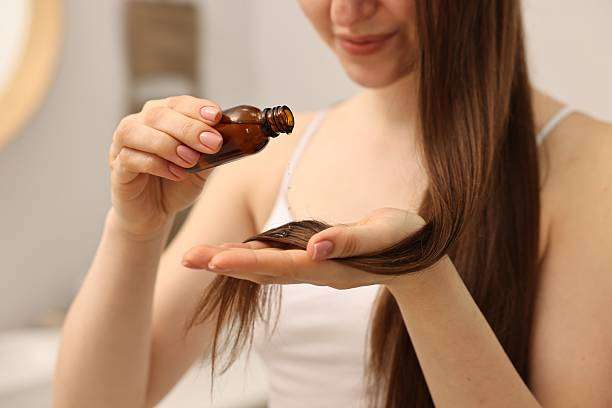
Sixth category of core ingredients: Synergistic effects of ingredients are more important than a single star ingredient.
In a real formula, there is never a single ingredient that can “save hair on its own.” What truly determines the value of hair oil is whether its different ingredients work together effectively.
Some components are responsible for spreading, some for film formation, some for heat resistance, and some for stabilizing the feel. If all components try to take on the task of “repairing,” the result is often mutual interference, and the effect is actually reduced.
This is why, in my professional judgment, I focus more on the logic behind the ingredients than on the gimmicks.
Establish a long-term, reusable understanding of ingredients, rather than chasing repair myths.
When you truly understand the roles and boundaries of these six core ingredients, you will discover a realistic but important conclusion: the value of hair oil lies not in “repairing dead structures,” but in “making hair live longer in real-world environments.”
hair oil is used under this premise, its ingredients can perform their intended purpose, and your hair care experience will become stable, controllable, and predictable.
FAQ
Can the repairing ingredients in
Does hair oil really make split ends disappear ? No. Hair oil can only make split ends less noticeable by forming a film and providing lubrication, but it cannot reconnect the broken structures.
Why are some silicone-free hair oils actually greasier?
Because they lack a stable film-forming system, plant oils tend to accumulate on the surface, resulting in a concentrated and uneven oiliness.
hair oil
daily on damaged hair , provided that the dosage is reasonable, the ingredients are clearly defined, and hair oil is used as a protective tool rather than a treatment product.