
Having worked in the hair care industry for many years, I can say with almost certainty that what truly destroys hair is not the dyeing or perming itself, but the heat damage that is repeatedly ignored yet occurs every day. Hair dryers are one of the most underestimated components.
Many people believe that as long as it’s not a high-temperature straightener or curling iron, hair dryers cause minimal damage to hair. So they wash their hair every day, blow-dry it every day, repeating the same process, only to suddenly find one day that their hair has become dry, stiff, inelastic, frizzy at the ends, and even breaks easily when combed. By this time, the problem has often been accumulating for quite some time.
In these consultations, hair oil is frequently mentioned, but its role is extremely confusing. Some people see hair oil as a “remedy after blow-drying,” some apply it heavily directly to wet hair, and others simply believe that hair oil will worsen heat damage and therefore avoid it altogether. The truth is, hair oil can indeed be part of heat protection, but only if you understand how heat damage occurs, and what hair oil can and cannot protect against.
In this article, I will start from scientific principles and combine real-world hair care experience to systematically explain four key techniques for hair oil protection against heat from hair dryers. These are not just superficial actions, but a set of protective strategies that can be used repeatedly over the long term.

First, let’s see the truth: Where exactly does heat damage from a hair dryer occur?
Before discussing any protection, we must first understand the nature of the damage that the heat from a hairdryer causes to hair. Many people simply equate “high temperature” with “drying hair,” but the reality is much more complex.
The main component of hair is keratin, a protein structure that is highly sensitive to heat. When the temperature consistently exceeds a safe threshold, the hydrogen bonds within the keratin are broken, reducing the hair’s elasticity. Furthermore, hair dryers generate not only heat but also high-speed airflow, which accelerates moisture evaporation, causing the hair to undergo drastic changes in moisture levels within a short period.
This rapid water loss prevents the cuticle from closing smoothly, forcing the hair cuticles to open and become irregularly shaped. Over time, this increases surface friction, making the hair feel rougher and losing its shine. The real problem isn’t just “heat,” but the combined effect of heat and water loss .
Understanding this is crucial because it directly determines the boundaries of hair oil ‘s protective function.

II. The true role of hair oil in heat protection, rather than its mythologized all-purpose shield.
Many hair care advertisements suggest that hair oil can “insulate against high temperatures,” as if forming a barrier that completely blocks heat from the hair. However, from a physics perspective, this is not true. Hair oil cannot prevent heat transfer, nor can it leave hair “undamaged” under high temperatures.
hair oil can really do is manage the heat effect during blow-drying . When the oil forms a uniform and stable film on the hair surface, it can slow down the rate of moisture loss and reduce direct friction between the hair and the air, as well as between the hair strands, thereby reducing the probability of the cuticle being lifted and worn.
In other words, hair oil is not an enemy of heat, but rather a buffer against heat damage. Its protective value will only be apparent when used in the right place and at the right time.
Thirdly, protection tip one: Hair oil isn’t something you should use as early as possible; you should use it at the “semi-dry” stage.
This is one of the most common and fatal misconceptions about using hair oil for heat protection. Many people rush to apply hair oil while their hair is still dripping wet , hoping to create a protective barrier in advance. But the result is often the opposite.
When hair is completely wet, hair oil is difficult to apply evenly to the hair surface, and is easily diluted by water and washed away during blow-drying. This not only reduces the protective effect, but may also cause local oil film buildup, affecting subsequent styling.
The ideal time to use the oil is when the hair is semi-dry. At this point, the surface moisture has significantly decreased, and the hair strands are beginning to be exposed, but they still retain a certain level of humidity. The oil can then adhere smoothly, forming a stable film without being washed away by excessive moisture.
This timing determines whether the hair oil can continue to work during the blow-drying process, rather than existing briefly and then disappearing quickly.
IV. Protection Technique Two: Heat protection is never about full-head coverage, but rather precise intervention in specific areas.
Another frequently overlooked fact is that the heat damage from hair dryers does not occur evenly. The hair roots are close to the scalp and are naturally warmer, but the drying time is relatively short; the part that truly suffers from repeated hot air impact is the mid-lengths to the ends of the hair.
If you apply hair oil evenly to your entire hair, especially near the roots, it will not only fail to improve the protective effect, but may also disrupt the scalp’s oil balance, leading to flat hair or uncontrolled oil production.
The scientific logic of hair protection always dictates using resources where they are most needed. Hair oil should be concentrated on the section from the mid-lengths to the ends of the hair, as this is the area where the cuticle is most vulnerable and most prone to moisture loss due to heat. When hair oil forms a continuous protective layer in these areas, overall heat damage can be effectively mitigated.
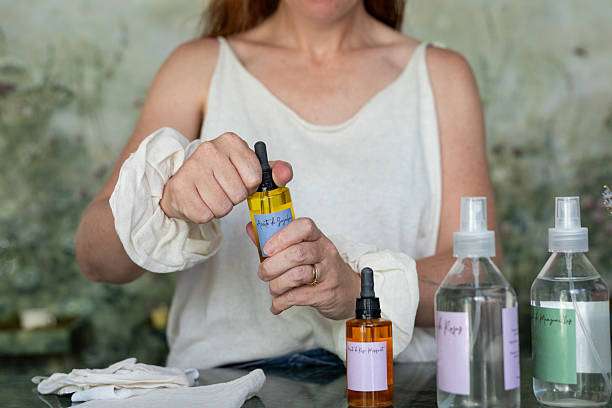
Fifth, the third protective technique: The combination of hair oil and blow-drying method determines the upper limit of protection.
hair still feels dry even when they’ve used hair oil correctly. The answer often lies not in the hair oil itself, but in how you blow-dry your hair.
If a hairdryer is used at close range with high heat for an extended period, even the best protection will be compromised. Hair oil is meant to reduce risk, not make incorrect operation safer.
Truly effective heat protection comes from the synergy between hair oil and the blow-drying method. Maintaining a proper distance, constantly moving the air vent, and avoiding prolonged concentrated heating of the same area are essential to ensure the hair oil ‘s buffering effect remains effective. If the blow-drying process itself is harsh, then any hair care product becomes merely a placebo effect.
Sixth, Protection Tip Four: The protective value of hair oil depends on “not over-application”.
In many cases of failed hair care, I see that the problem isn’t insufficient hair oil , but rather excessive use. Especially when worried about heat damage, people tend to keep adding more hair oil , hoping for “an extra layer of safety.”
However, an excessively thick oil film can reduce the hair’s breathability, causing moisture to be lost unevenly during blow-drying, which can actually worsen localized dryness. At the same time, an oil film buildup can increase the adhesion between hair strands, increasing the pulling force during blow-drying and amplifying mechanical damage.
Truly effective protection is always based on “just enough”. The goal of hair oil is to form a thin, continuous layer of protection, not to coat the hair strands.
7. Why do some people still experience significant heat damage even after using hair oil ?
After understanding these four protective techniques, many seemingly contradictory phenomena will become clear. Some people use hair oil but still feel that their hair gets worse with each blow-drying. This is not because the hair oil is ineffective, but because the protective logic is not closed.
Essential oils can only be applied at the right time, in the right place, and in the right way. If any step in this process goes wrong, the protective effect will be greatly reduced.
Heat damage is not a one-time event, but the result of long-term accumulation. The value of hair oil lies not in the “magical effect” of a single blow-drying session, but in slowing down the rate of damage over the long term.
8. Make essential oil protection a long-term, sustainable habit.
A truly mature hair care approach isn’t about obsessing over how many products you use each day, but rather establishing a stable, low-damage daily routine. The role of hair oils in heat protection from blow-drying is precisely to help you turn unavoidable heat into a manageable risk.
When you stop expecting essential oils to “fix everything” and instead let them work quietly in the right place, improvements in your hair’s condition will happen without you even realizing it.
Hair won’t get better overnight, but it will respond to every instance of being treated gently.
Conclusion: Reducing thermal damage is more important than post-incident repair.
Of all hair care strategies, prevention is always more effective than cure. Hair dryers aren’t the enemy; incorrect usage is. Hair oil isn’t a magic shield either, but it can act as a buffer between you and heat.
When you understand the nature of heat damage and the true protective limits of hair oil , you are already ahead of most people.
Healthy hair is never a matter of chance, but the result of countless correct choices.
FAQ: Frequently Asked Questions about Hair Oil and Hair Dryer Heat Protection
Q1: Will using hair oil before blow-drying actually damage my hair?
When used in the right amount and at the right time, hair oil does not increase the risk of heat damage. The real problem is caused by high-temperature blow-drying and an excessively thick oil film.
Is heat protection oil suitable for
fine , soft hair ? Yes, but the amount used must be extremely limited, and the root area should be strictly avoided. Fine, soft hair has a lower tolerance for oil film.
Q3: If I blow-dry my hair every day, do I have to use
hair oil every day? No, it’s not necessary. Whether or not to use hair oil depends on the condition of your hair, the dryness of the environment, and the intensity of your blow-drying, not on a fixed frequency.