
In the hair care product category, hair oil has always been in a seriously misunderstood position. It’s seen as a repair miracle, yet often accused of being the culprit behind scalp problems. Some believe hair oil can save dry and frizzy hair, while others find that after using it for a period of time, their scalp becomes oilier, itchiness worsens, hair falls out, and even signs of hair loss become apparent. So the question arises: is hair oil a helper for hair care, or a hidden killer of scalp health?
The real answer lies not in whether to use it or not, nor in whether it’s expensive or cheap, but in whether you truly understand the logic behind hair oil ‘s ingredients and the real relationship between these ingredients and the scalp. The scalp is not merely an appendage of the hair; it’s a skin tissue with a complete ecosystem, possessing sebaceous glands, a microbiome, a keratin renewal rhythm, and self-defense mechanisms against irritants. When hair oil ingredients are incorrectly introduced into this system, problems often don’t appear immediately, but accumulate slowly and steadily.
Understanding the seven key truths about hair oil ingredients and scalp health is crucial to avoiding hair care mishaps and is the real reason why many people keep getting worse despite years of hair care.
Truth #1: The vast majority of hair oils are not designed for the scalp.
From the perspective of formula design, the research and development goals of the vast majority of hair oils on the market are extremely clear: to improve the physical condition of the hair surface. Smoothness, shine, frizz control, and a light feel are the true purposes of hair oil . In other words, hair oil targets hair fibers that have already undergone keratinization and have no metabolic capacity, rather than the still actively metabolizing scalp.
Hair itself is dead tissue made of keratin; it does not absorb nutrients or secrete oil. Hair oil smooths the hair surface by coating and filling the gaps between the hair cuticles, thus reducing light scattering and friction damage. This is a typical physical modification, not biological repair.
The scalp is entirely different. The scalp is part of the skin, containing numerous sebaceous and sweat glands responsible for regulating the balance of oil, moisture, and microorganisms. When a product whose primary mechanism of action is covering and occlusion is frequently applied to the scalp, it essentially forces an external variable onto a system that already possesses self-regulating capabilities.
This is why many scalp problems don’t appear immediately, but gradually emerge after using hair oil for a period of time. Hair oil itself hasn’t done anything wrong; it’s just being used in areas where it’s not good at or even suitable.
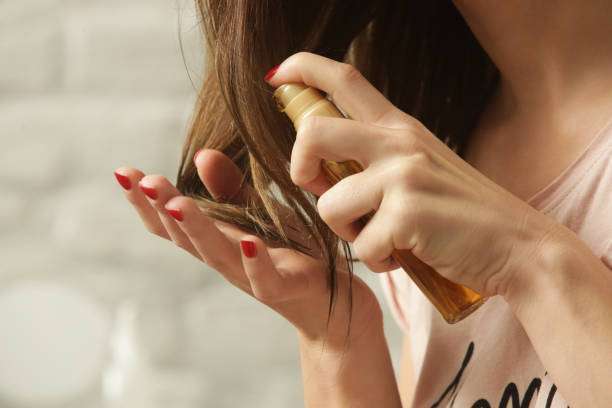
Truth #2: The more nourishing the ingredients, the greater the potential burden on the scalp.
When choosing hair oil , many people are attracted by the high-end oils listed in the ingredients. Argan oil, marula oil, camellia oil, and jojoba oil are often equated with nourishment, repair, and naturalness. However, from the perspective of scalp health, the preciousness of an ingredient does not necessarily mean that it is suitable for application to the scalp.
Most plant oils are medium to high molecular weight lipids, possessing strong occlusive properties and stability. This is advantageous for hair ends, as they effectively reduce moisture loss and delay dryness and split ends. However, for the scalp, excessive occlusion means restricted keratinocyte respiration and interference with sebum excretion channels.
More importantly, plant oils cannot be naturally metabolized by the skin like human sebum. Once they remain near the hair follicle opening, they often can only be removed with cleansing products. If the cleansing power is insufficient or the cleansing frequency is mismatched, these oils will gradually accumulate, altering the microenvironment around the hair follicle.
Many seemingly sudden scalp problems are actually the result of long-term use of highly nourishing hair oil . It’s not that the oil is bad, but rather that the scalp doesn’t need extra nourishing oils.
Truth #3: Silicones are not the real culprit behind scalp problems.
In discussions about hair oil ingredients, silicone has long been criticized for clogging pores. However, from a scientific perspective, silicone itself does not possess biological activity; its effects are more evident at the physical level.
The advantages of lightweight silicone ingredients lie in their stable molecular structure, good spreadability, uniform film formation, and resistance to oxidation. They can form a very thin protective film on the hair surface, reducing friction and moisture loss, while providing an instant smooth feel.
The real problem isn’t the presence of silicone, but rather where and how it’s applied. When silicone-containing hair oil is applied excessively to the scalp, or when it’s repeatedly layered without proper cleansing, the silicone film gradually mixes with sebum and dead skin cells, forming a residue that’s difficult to remove completely with regular shampoo.
Therefore, instead of blindly avoiding silicon, it’s better to understand its functional boundaries. Silicon is suitable for hair, but not for the scalp—that’s the key point.

Truth #4: Natural ingredients do not equal gentleness.
hair oils that claim to be scalp-friendly contain a certain proportion of essential oils, such as tea tree, rosemary, peppermint, or lavender. While these ingredients do have their value in aromatherapy, they are not always safe choices for everyday hair care products.
Essential oils are essentially highly concentrated plant-based active substances and can be somewhat irritating. Even essential oils considered mild can put stress on the scalp barrier if used frequently or at improper concentrations.
Many scalp problems such as sensitivity, redness, and itching are not caused by insufficient cleansing, but rather by a decline in the stratum corneum’s defense capabilities after prolonged exposure to irritating ingredients. The cooling sensation or fragrance of essential oils can easily mislead people into thinking that their scalp is being pampered, but this feeling is not equivalent to true health.
The scalp doesn’t need to be frequently activated; what it needs more is stability and restraint.
Truth #5: Increased scalp oiliness is often not due to a lack of oil, but rather a disruption of the oil-producing system.
A frequently misunderstood logic is that oily scalp is seen as a sign of insufficient oil production, requiring additional oil. In fact, oily scalp is more of a manifestation of regulatory imbalance than a simple sign of dryness.
Scalp sebum secretion is influenced by hormone levels, temperature changes, cleaning frequency, and external stimuli. When external oil frequently covers the scalp, the brain may misinterpret the current environment as an excess of oil and attempt to readjust the secretion rhythm of the sebaceous glands.
This adjustment is often not linear, but rather disordered. Some people experience a brief period of feeling refreshed after washing, followed by a rapid increase in oil production; this is a typical reaction when the sebum regulation system is disrupted.
hair oil ingredients frequently enter the scalp environment, they cease to be just hair care products and become variables that affect the scalp’s ecosystem.
Truth #6: Products truly suitable for scalp contact are often not like hair oil.
When we re-examine product formulations from the perspective of scalp health, we find that products truly suitable for the scalp often lack the heavy, oily feel of traditional hair oil . They tend to have lighter, less occlusive formulas that emphasize soothing, balancing, and barrier repair.
These products don’t aim to make hair instantly shinier, but rather to stabilize the scalp environment. They don’t leave a noticeable oily film after use, nor do they disrupt the scalp’s normal sebum metabolism.
If a product claims to both deeply nourish the scalp and deliver a high-shine styling effect, then it’s worth being wary of its ingredients.
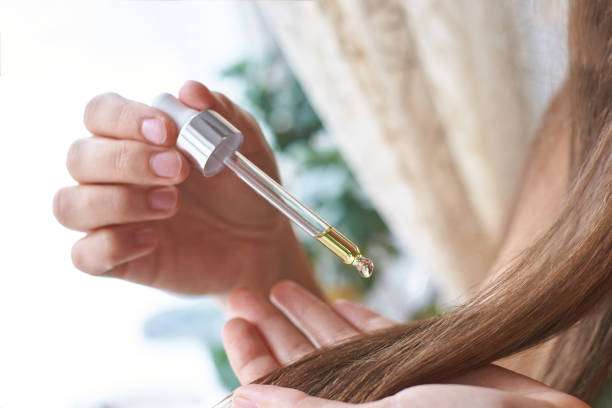
Truth #7: What’s often destroyed isn’t the hair, but the long-term health of the scalp.
Hair problems are often the result, while scalp condition is the root cause. When hair oil comes into contact with the scalp in the wrong way for a long time, in the short term it may only cause flat hair, oiliness, and increased difficulty in cleaning, but in the long term it may lead to a deterioration of the hair follicle environment and affect the quality of new hair growth.
This is why some people don’t see a significant improvement in their hair condition even after constantly changing shampoos and conditioners. The real problem isn’t in the cleansing process, but in introducing ingredients that are unsuitable for the scalp during the conditioning process.
The essence of hair care is not about constantly layering on good products, but about respecting structural differences and understanding boundaries.
In conclusion, the key to choosing the right hair oil lies in knowing how to control your body.
The scalp is skin, and hair is fiber; this is the starting point for all hair care logic. The value of hair oil lies in protecting and conditioning the hair itself, not in reshaping the scalp environment. Once this boundary is crossed, even the most advanced ingredients can become a burden.
The truly smart way to care for your hair is never about quantity, but about precision.
FAQ
Q1: If I don’t let hair oil come into contact with my scalp at all, will it affect the styling effect?
Absolutely not. The core area where hair oil should be applied is from the mid-lengths to the ends of the hair. As long as the amount and application are correct, the smoothness and shine will remain consistent.
Q2: Does this mean that oily scalps are not suitable for using any hair oil ?
Not at all. Oily scalps need to control the area and amount of hair oil used, and avoid contact with the scalp. This can actually reduce the overall greasiness caused by dry hair ends.
Q3: How can I determine if a hair oil might be unfriendly to the scalp?
If the formula is based on a high proportion of oils or strong irritating essential oils, and emphasizes that it can be applied directly to the scalp, then you need to carefully assess its long-term use risks.