
Common Misconceptions and Risks of Using Hair Oil
Hair oils are widely advertised as a miracle hair care product, capable of nourishing hair, smoothing frizz, and improving dryness and roughness. However, in reality, not all hair types are suitable for immediate use with hair oil. Some hair types, when used improperly, may experience oiliness, sticking to the scalp, increased weight, or even scalp discomfort, leading to the misconception that “hair oil makes things worse.”
This stems primarily from misunderstandings about hair type, oil requirements, and application techniques. Hair oil itself is not harmful; its mechanism of action is to form a protective film on the surface, provide nourishing lipids, and improve cuticle arrangement to some extent. However, if used incorrectly or on unsuitable hair types, these effects of hair oil can be amplified, leading to a deterioration in hair condition.
Different hair types exhibit significant differences in their ability to absorb oil, their cuticle structure, and their natural sebum production. This is the fundamental reason why some people experience adverse effects after using hair oil. Understanding these differences can help us scientifically determine which hair types require caution when using hair oil and how to adjust our usage strategies to avoid making mistakes.
Category 1: Fine and soft hair
Fine, soft hair is the type most easily “ruined” by hair oil. Fine, soft hair has a small diameter, limited fiber strength, thin and loosely arranged cuticles, and an active scalp with high sebum production. When using oil on this type of hair, an excessively thick oil film can easily form, causing the hair strands to stick together, lose their volume, and increase the burden on the scalp. Especially when applying hair oil directly to the roots or scalp, the greasy feeling is quickly amplified, making the hair appear heavy and suffocating to the touch.
For fine, limp hair, choose lightweight hair oils such as complex oils or light plant oils, and use very little, applying only to the ends or mid-lengths. Warm the oil on your fingertips before applying evenly, sectioning the hair to reduce buildup. Avoid frequent application or layering of multiple oils, as this can create a thick, oily film that makes hair lose elasticity and volume.
Category 2: Oily scalp and hair
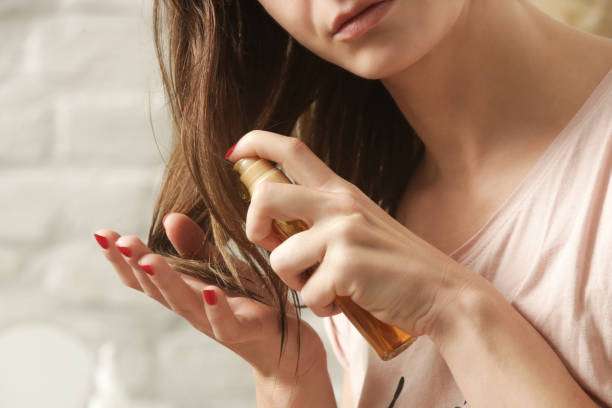
People with oily scalps typically have overactive sebaceous glands, resulting in a naturally oily film on their hair. If hair oil is used on this type of hair without proper sectioning or quantity control, it can easily lead to a greasy scalp, flat hair, unmanageable styling, and even scalp itching or clogged hair follicles. Oily scalps can use oil , but special attention needs to be paid to the application strategy, focusing on the ends and mid-lengths of the hair and avoiding direct application to the scalp.
Furthermore, oily scalps have limited absorption capacity under natural conditions, and excess oil tends to remain on the surface, forming a thick film that affects the evenness of shine. Scientific recommendations suggest applying a small amount of hair oil after shampooing, while the hair is still damp, and quickly distributing it evenly with your fingers. Allow it to air dry to aid absorption. This method achieves smooth and shiny hair without burdening the scalp, preventing greasiness from dominating the overall experience.
Category 3: Short hair or hair with thinning volume
Short hair or thin hair is also easily “ruined” by oil. Thin hair means uneven oil film distribution, and using too much hair oil on short hair will immediately make it look heavy and greasy, causing the hair to lose its volume and layering. The greasiness of this type of hair is more easily magnified visually, and even a small amount of oil may form an obvious shine or heaviness on the hair surface, giving the impression that hair oil is uncontrollable.
For those with short or thin hair, the amount of hair oil used should be precisely controlled. Generally, only a small amount needs to be applied to the fingertips and evenly distributed across the ends and mid-lengths. It’s best to apply it section by section, avoiding covering the entire head at once. Simultaneously, gently patting or using a hairdryer to help disperse the oil film helps maintain a light and airy look. By adjusting the application method and amount appropriately, you can avoid the “hair oil disaster” caused by concentrated oil film, allowing even short or thin hair to enjoy smooth, shiny hair without looking greasy.
In-depth analysis of the causes of the rollover
Hair types mentioned above that are prone to being “tricked” by hair oils don’t suffer from problems with the oils themselves, but rather from improper application techniques, dosage control, and product compatibility. Many users blindly pursue smoothness and shine, ignoring their hair’s characteristics and oil absorption capacity, leading to excessive application or buildup. Furthermore, there are misconceptions about hair oil’s functions, with some mistakenly believing it can completely “repair hair strands” or easily solve scalp oil problems, resulting in the opposite of the intended effect.
Scientific hair care emphasizes the matching of products, hair type, and application techniques. Choosing the right type of oil, controlling the amount used and application area, and considering hair type and care habits are all essential to achieving hair care goals without adverse effects. By understanding the mechanisms behind adverse effects, users can avoid common problems and fully utilize the nourishing and protective properties of essential oils by mastering scientific methods.
Scientific Hair Care Practice Guide
To avoid adverse effects from using hair oil , it is recommended to adopt the following scientific application strategy: First, choose the type of oil according to your hair type . Dry hair can choose nourishing plant oil or compound oil, while fine and oily hair can choose lightweight hair oil or a mixture of essential oils. Second, control the amount used, applying small amounts multiple times to avoid covering the entire hair at once.
Third, focus on applying to the ends and mid-lengths of the hair, avoiding direct contact with the scalp to reduce greasiness. When using, you can warm the hair oil and massage it evenly with your fingertips to allow the oil film to penetrate the hair shaft while using air drying or natural drying to aid absorption. Finally, combine with regular shampooing and deep conditioning products to ensure that the internal structure of the hair is repaired and nourished, while the surface is protected and shiny.
When used correctly, oil will not only avoid causing problems, but it can also improve hair cuticle alignment, enhance hair shine, and reduce breakage and split ends, leaving hair smooth, healthy, and natural. For those with hair types at high risk of adverse reactions, by using scientific methods and matching hair type, they can still enjoy the benefits of hair oil and no longer mistakenly believe that “hair oil makes things worse.
Conclusion
Hair oil itself is neither the enemy of hair care nor the culprit behind oily hair. Most mishaps stem from incompatible hair types, excessive use, or improper application techniques. Those with fine, soft hair, oily scalps, and short or thin hair are the three groups most prone to problems with hair oil.
However, these risks can be completely avoided by mastering the correct usage methods, choosing the right type of hair oil, and controlling the application technique. Understanding the true function and application strategies of hair oil can make the hair care process smoother and more efficient, truly realizing the value of the oil in protecting the hair cuticle, nourishing the hair, and enhancing shine.
FAQ
Why is my hair always greasy when I use hair oil?
In most cases, it’s due to using too much or applying it to the roots or scalp. Controlling the amount used and applying it only to the ends and mid-lengths can usually prevent this problem.
Which type of hair oil is most likely to cause problems?
Fine, soft hair, oily scalps, and short or thin hair are most prone to feeling greasy or heavy, so special attention needs to be paid to the type of product and the amount used.
Does hair oil help repair damaged hair?
Hair oil primarily provides surface protection and nourishing lipids, improving cuticle arrangement and shine, but it cannot replace internal protein repair products. It is recommended to use it in conjunction with deep conditioning products.