
Essential Oil Usage Failures
In the hair care industry, dryness is often considered the biggest enemy of hair oils. People generally believe that as long as the hair oil is nourishing and rich enough, it can easily improve dryness and frizz. However, this is not the case.
Numerous cases of failed hair oil use show that over 70% of the failures or poor results are not due to a lack of nourishment in the hair itself, but rather to the surrounding humidity environment. The impact of humidity on hair condition has long been underestimated. It not only determines the volume and smoothness of the hair, but also directly affects the absorption, distribution, and effectiveness of hair oils.
Mistakenly treating dryness as the primary enemy often leads users to make mistakes in choosing and applying hair oils, thus failing to maximize the benefits of hair care products.
The effects of humidity encompass multiple dimensions, including air humidity, localized moisture, and the dryness of hair after washing and conditioning. When humidity is too high, hair cuticles tend to swell and lift, making it difficult for the oil film to adhere evenly. This causes hair oil to accumulate on the hair surface, resulting in a greasy or heavy feeling.
When humidity is too low, hair loses moisture significantly, becoming dry. While hair oil can provide temporary nourishment, absorption is uneven, and the cuticles cannot fully close, leaving the hair still prone to frizz and breakage. Therefore, a scientific understanding of humidity is a crucial prerequisite for the correct use of hair oils.

The Effect of Humidity on Hair Cuticles
The outer layer of hair is covered by cuticles, the density of which varies with humidity. In high humidity, the cuticles swell, the hair shaft absorbs moisture from the air, slightly increasing the hair diameter and causing the cuticles to lift.
In this state, if hair oil is applied, the oil film cannot easily cover the cuticle surface, resulting in oil droplets or uneven shine, making the hair look greasy or heavy. Conversely, in low humidity environments, the hair lacks moisture, the cuticles shrink, and while hair oil adheres easily, absorption is slower. The surface oil film may not penetrate the hair shaft, leaving the hair surface dry or lacking smoothness.
Humidity affects the effectiveness of hair oils not only with single applications but also with long-term hair care results. In high-humidity environments, hair cuticles frequently expand and contract, and the protective oil film is easily damaged by friction, shortening the duration of the oil’s effects.
In low-humidity environments, dehydration causes the oil film to remain on the hair shaft surface for too long, hindering hair respiration and moisture exchange, potentially leading to static electricity and frizz. Therefore, the use of hair oils requires consideration not only of hair type and product type but also of ambient humidity to achieve the desired smoothness, shine, and nourishment.
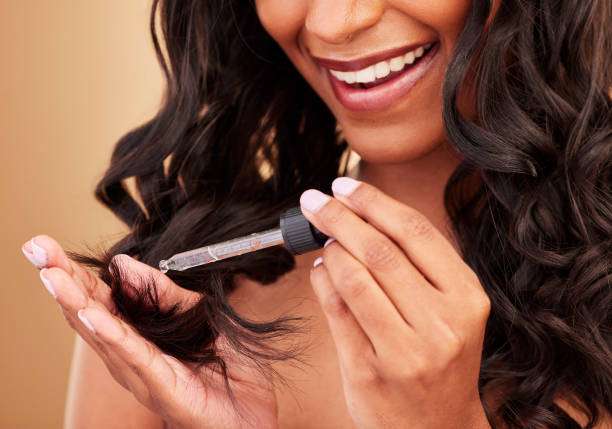
Analysis of Failed Hair Oil Cases
In numerous hair care practices, cases of hair oil failure due to humidity are common. In high-humidity environments, users often find that even with high-quality oil, hair remains greasy or flat against the scalp within hours. Especially during humid seasons or rainy days, the oil struggles to form a uniform protective film, instead adding weight to the hair and causing the style to collapse.
In low-humidity environments, the dry air in heated rooms during winter causes hair to lose moisture significantly. Although hair oil adheres to the surface of the hair strands, the hair shaft still lacks moisture, resulting in dry, frizzy hair. Users mistakenly believe the oil is ineffective or that they have chosen the wrong product.
Analysis of these cases reveals that the root cause of essential oil failures is not product quality or the dryness of the hair itself, but rather a mismatch between environmental humidity and the function of the essential oil. In environments with excessively high or low humidity, the absorption, distribution, and adhesion mechanisms of the essential oil are disrupted, preventing the hair from receiving the desired nourishment and protection.
This explains why many people experience “less than expected results” after using essential oils, mistakenly believing that the essential oil is unsuitable for them or that there is something wrong with the oil itself.
Essential Oil Usage According to Humidity
To address hair oil mishaps caused by humidity, it’s essential to adjust your usage strategy scientifically. First, choose the type of hair oil based on the ambient humidity.
- In high-humidity environments, lightweight hair oils or complex oil blends are more suitable because their good fluidity allows for easy and even coverage of the hair shaft, reducing heaviness. Thicker plant oils or complex oils tend to accumulate on the hair surface in humid conditions, creating a greasy feel; therefore, use less or apply only to specific areas.
- In low-humidity environments, nourishing or lipid-rich hair oils are more suitable, providing extra moisture locking and protection for the hair cuticles while maintaining smoothness and shine.
Applying hair oil to slightly damp hair after shampooing helps the oil and water mix to form a protective film, allowing the oil film to adhere evenly to the hair shaft. Applying oil to completely dry hair may result in slow absorption and localized oiliness.
- In high-humidity environments, gently pat away excess water before applying a small amount of oil to specific sections to avoid concentrated buildup.
- In low-humidity environments, first mist the hair before applying hair oil to help the hair shaft absorb and lock in moisture.
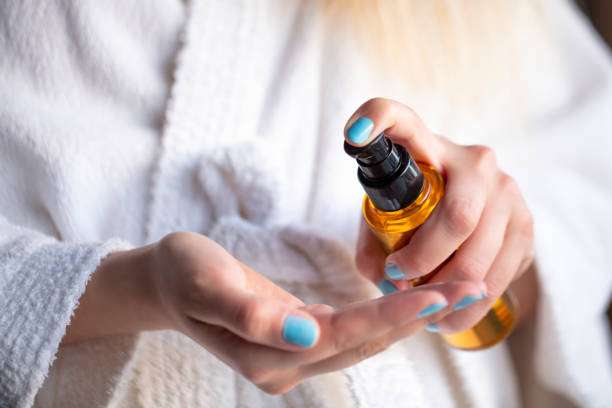
Hair Oil in Humidity Control
Using hair oil scientifically is not just about hair care, but also a strategy for regulating humidity levels. The protective film formed by hair oil can reduce the excessive absorption or loss of external humidity by the hair, making it less prone to swelling and frizz in high-humidity environments and less prone to dryness and breakage in low-humidity environments.
By choosing the right products and applying them correctly, hair oil can become an important tool for regulating the effects of humidity on hair quality, achieving a balance between smoothness, shine, and protection.
Furthermore, combining hair oil with regular conditioning and deep-repair products can further enhance its stability and effectiveness in humid environments. Deep conditioning replenishes the proteins and lipids within the hair shaft, while hair oil forms a protective film on the surface. This dual action ensures that hair remains smooth, shiny, and resilient, even in high- or low-humidity environments. This strategy embodies the core principle of hair care science: environmental factors and product use must be coordinated to achieve maximum results.
Conclusion
Hair oil application issues are not due to dry hair itself, but rather the impact of humidity on hair condition and the oil film’s mechanism. In high humidity, hair cuticles swell, making it difficult for the oil film to cover evenly; in low humidity, the hair shaft is dehydrated, leading to incomplete oil film absorption. These are the root causes of unsatisfactory hair oil results.
By understanding the relationship between humidity and hair oil’s effect, choosing products suitable for the environment and hair type, and mastering the scientific application techniques, hair oil can truly deliver its hair care benefits, achieving smooth, shiny, and resilient hair, no longer succumbing to the challenges of environmental humidity.
FAQ
Why is my hair still frizzy after using hair oil?
In most cases, the humidity level affects the arrangement of hair cuticles and the effectiveness of the oil film. In high- or low-humidity environments, hair oil may not be absorbed evenly or form a protective film, so the amount and type used need to be adjusted according to the environment.
How to use oil in a high-humidity environment without it becoming greasy?
It is recommended to use a lightweight hair oil or essential oil complex, apply it in small amounts to sections, and use it when the hair is slightly damp, avoiding covering the entire hair at once.
How can oil be used to maximize its effects in low-humidity environments?
You can first use a hair spray to increase hair moisture, then apply a nourishing or lipid-rich essential oil, and at the same time use a deep conditioning product to help the hair shaft absorb and lock in moisture, keeping it smooth and shiny.