
Hair oil classification and health controversies
Hair oil, as an important tool in modern hair care, can be broadly divided into two categories on the market: natural and chemical. Natural hair oils are mainly composed of plant extracts, plant lipids, essential oils, and vitamins, emphasizing natural, gentle, and low-irritant ingredients and focusing on long-term nourishment and scalp health.
Chemical hair oils, on the other hand , are primarily composed of synthetic oils, silicone oils, fragrances, and functional additives, focusing mainly on immediate effects such as shine, smoothness, and frizz control. For consumers, choosing the right type of hair oil not only concerns hair health but also involves a comprehensive consideration of long-term safety, scalp adaptability, and psychological comfort.
In the world of hair care, the debate between natural and chemical hair oils mainly focuses on three aspects:
- Their physiological effects on the scalp and hair follicles.
- Their ability to maintain long-term hair health.
- The potential risks to skin and overall health.
By scientifically analyzing these three aspects, we can more clearly determine which type of hair oil is more in line with health principles in the long run, thus making a rational choice.
Reason 1: The gentleness of natural ingredients on the scalp and hair
The primary advantage of natural hair oil lies in its gentle formula, causing minimal irritation to the scalp and hair. Plant oils are rich in essential fatty acids, antioxidants, and vitamins, which can penetrate the hair cuticle and scalp stratum corneum to provide deep nourishment without clogging pores or causing scalp discomfort.
Studies have shown that natural hair oils such as olive oil, jojoba oil, argan oil, and shea butter do not increase sebum production or cause inflammation when used on the scalp, helping to maintain the scalp’s microecological balance.
In contrast, some chemical hair oils, such as those containing high concentrations of silicone oil or synthetic oils, may enhance hair shine and smoothness in the short term, but long-term use may form an impermeable film on the scalp, hindering normal hair follicle metabolism and increasing the risk of skin irritation or folliculitis. Gentleness not only affects immediate comfort but also determines the long-term sustainability of hair oil in maintaining hair and scalp health.
Furthermore, the absorbability and penetrability of natural ingredients help nourish the hair both inside and out, while chemical-based ingredients primarily work on the hair surface, forming a temporary shine film. While this surface improvement is visually pleasing, it doesn’t change the internal health of the hair and may even mask underlying damage. Long-term reliance on natural hair oil can lead to brittle hair and split ends.
Therefore, natural hair oils offer greater advantages for long-term scalp and hair health maintenance, making them especially suitable for those with dry, damaged, or sensitive hair.

Reason 2: Antioxidant and Repair Capabilities
Another key benefit of natural hair oil is its antioxidant and repair functions. Natural plant oils are rich in polyphenols, vitamin E, carotene, and other natural antioxidants. These substances can neutralize free radicals and reduce damage to hair from environmental factors such as UV rays, air pollution, and chemical treatments.
Studies show that antioxidants not only reduce cuticle oxidation and breakage but also play a protective role in the hair follicle microenvironment, improving hair health and promoting hair strength and shine.
Chemical-based hair oils often rely on synthetic smoothers or silicone oils to simulate hair care effects. Their antioxidant and repair capabilities are limited; they can only provide a smooth surface and temporary protection, unable to penetrate deep into the hair follicle and hair shaft to provide long-term protection.
Antioxidant properties directly impact hair’s resistance to damage and hair follicle lifespan. Natural hair oils, through long-term use, improve the scalp microenvironment, reduce oxidative stress, and create conditions conducive to healthy hair follicles, indirectly promoting improved hair quality and reducing the risk of hair loss.
While chemical hair oils offer rapid surface protection, they lack internal repair capabilities, and long-term reliance may mask signs of hair damage, leading to cumulative damage. Scientific evidence demonstrates the superior antioxidant and hair-repairing properties of natural hair oils, making them more reliable for long-term care and healthy maintenance, highlighting their rationality as a healthy choice.

Reason 3: Low irritation and safety
The third reason is its low irritation and systemic safety. Natural oils primarily originate from edible or traditionally medicinal plants, typically extracted gently, and contain no excessive fragrances, preservatives, or chemical solvents, thus causing less irritation to the scalp and skin.
People with sensitive scalps, allergies, and children are significantly less likely to experience redness, itching, or rashes when using natural hair oils compared to chemical-based ones.
While the synthetic fragrances, silicone oils, and preservatives in chemical hair oils may be safe for short-term use, long-term use carries cumulative risks, including scalp microecological imbalance, clogged hair follicles, and even inflammatory reactions in those with sensitive skin. Furthermore, some chemical components may decompose under high temperatures or light exposure, generating irritating chemicals that could potentially damage the scalp and hair.
In terms of overall safety, natural hair oils, being plant-based, are less likely to cause toxicity or allergic reactions, making them more aligned with a healthy lifestyle for long-term use. While chemical-based hair oils offer rapid and noticeable results, their long-term safety depends on ingredient quality and frequency of use; misuse may increase the burden on the scalp and hair follicles.
Considering low irritation, absorbability, and long-term safety, natural hair oils have a clear advantage in healthy hair care options.
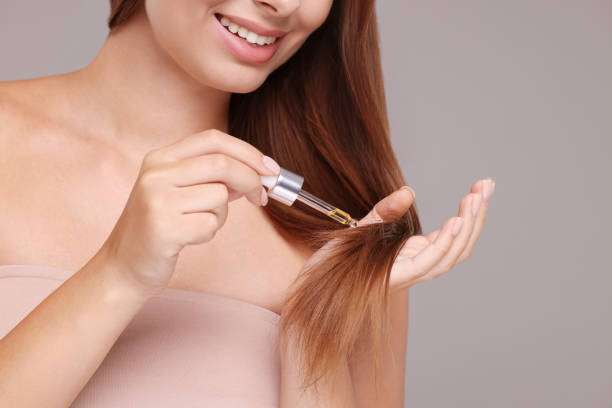
Comprehensive comparison and practical suggestions
Based on the three main reasons mentioned above—gentleness, antioxidant repair capabilities, and low irritation and safety—the advantages of natural hair oil for healthy hair care are clearly evident. Chemical hair oils offer immediate results in terms of appearance, smoothness, and frizz control, but long-term reliance may mask signs of hair damage and offer limited benefits for scalp and hair follicle health.
Natural oils are suitable for those who want to maintain scalp health, improve hair quality, and enhance hair follicle vitality in the long term, while chemical oils are better suited for short-term styling needs or emergency treatments.
In practical application, it is recommended to choose based on individual hair type and lifestyle.
- Dry or damaged hair can use highly nourishing plant oils, such as shea butter, argan oil, or olive oil, combined with warm massage.
- Fine, limp hair can choose lightweight plant oils or compound essential oils, avoiding excessive greasiness.
- Chemical hair oils can be used for short-term styling, special occasions, or outdoor environments, focusing on surface shine and smoothness, but should not be relied upon long-term.
Through scientific combination and application strategies, both immediate aesthetics and long-term health can be achieved, making hair care both efficient and safe.
In summary, natural hair oil aligns better with healthy hair care principles in the long run. Its gentleness, antioxidant properties, and low irritation provide continuous support for the scalp and hair. While chemical hair oils offer significant benefits, they focus on short-term effects, and long-term use should be approached with caution.
When choosing hair oil, one should consider hair type, lifestyle, and health needs and use a scientifically tailored approach to achieve a balance between effective hair care and health safety.
FAQ
Are natural oils completely free of side effects?
Most natural hair oils are gentle and safe, but a very small number of people may be allergic to certain plant ingredients. It is recommended to test a small area behind the ear or on the inside of the arm before use.
Can chemical-based oil be used long-term?
It can be used occasionally to meet immediate styling needs, but long-term reliance may increase the burden on the scalp and cover up signs of hair damage. It is not recommended as the first choice for long-term daily care.
Can natural and chemical oils be used together?
Yes, they can be used together in different situations. For example, use natural hair oil for daily care and chemical hair oil for special styling or short-term smoothing needs. However, pay attention to the order and amount of use to avoid increasing the burden on the scalp.