
Hair oil condition and risks after hair dyeing
Hair dyeing is a common hair styling method that uses chemical agents to change hair color, achieving personalized looks and fashion expression.
However, the dyeing process damages the internal structure of the hair strands, opening the cuticles to allow dye penetration. This process leads to protein loss and moisture reduction, making the hair dry, brittle, and prone to breakage.
Improper post-dyeing care can cause the color to fade easily, resulting in frizzy, split ends and reduced shine. Long-term accumulation of these issues can lead to serious hair damage.
Scientific research shows that dyed hair cuticles are open, making them exceptionally sensitive to the external environment. Ultraviolet rays, hot air, salt, pollutants, and the friction of shampooing can all accelerate color loss and structural damage.
Therefore, the core of post-dyeing hair care lies in closing the cuticles, locking in color, replenishing moisture and nutrients, and minimizing mechanical or chemical damage to the hair in daily life.
Hair oil, with its natural lipid components and multiple conditioning effects, has become an important tool for color locking and repair after dyeing.
The Importance of Immediate Post-Dyeing Nourishment
The first 24 hours after hair dyeing are the most vulnerable period for hair and a crucial window for post-dye care.
During this time, the hair cuticles are still semi-open. Applying hair oil promptly replenishes lost oils and moisture, forming a protective film on the cuticle surface.
Choose a hair oil containing shea butter, argan oil, or amla oil , apply it evenly to the mid-lengths and ends of your hair, and gently massage your scalp.
This helps improve hair smoothness, shine, and overall resilience. Immediate nourishment not only alleviates dryness and frizz but also slows down dye fading, laying the foundation for color locking.
The key to post-dyeing immediate nourishment lies in using the right amount and ensuring even coverage. Applying too little may fail to form a complete protective film, while applying too much can easily lead to a greasy feeling and difficulty in styling.
Gently massaging the scalp can stimulate blood circulation, enhance hair follicle vitality, and provide long-lasting nourishment to the hair.
At the same time, the natural lipids in hair oil can penetrate the gaps between hair cuticles, sealing dye molecules and reducing fading problems caused by shampooing and environmental factors, thus playing a crucial role in locking in color after dyeing.
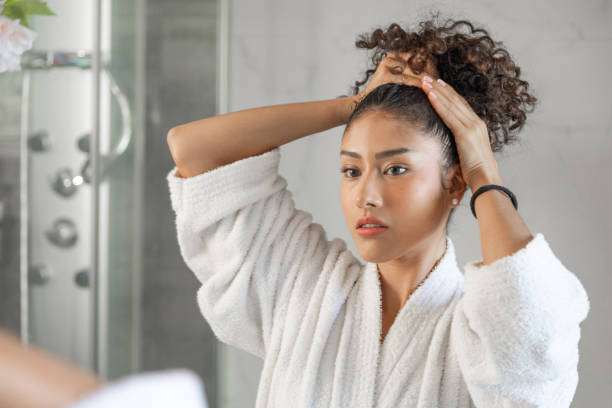
Regular shampooing and conditioning combined with hair oil
Post-dye hair care relies not only on shampoo but also on a proper washing and conditioning process.
After dyeing, choose a gentle, sulfate-free shampoo to avoid over-cleansing and causing dye loss.
Before shampooing, lightly apply shampoo to the ends of your hair to form a protective layer and reduce friction damage.
During shampooing, warm water and gentle massage are key. Water that is too hot will open the hair cuticles, accelerating color fading, while excessive friction will damage the cuticle structure.
Using hair oil immediately after shampooing nourishes and seals in the color and moisture, further locking in the hair’s color and moisture.
Hair oil forms a thin film on the hair cuticle, reducing the damage from air, heat, and sun exposure to dyed hair, keeping it shiny and smooth.
Regular shampooing and conditioning combined with the use of hair oil not only prolongs the coloring effect but also improves dryness, frizz, and brittleness, achieving overall healthy hair management after dyeing.
Protective strategies before hot molding
Dyed hair is more fragile, and the use of heat styling tools such as hair dryers, curling irons, and straighteners can accelerate hair damage and color fading.
Therefore, applying hair oil as a protective barrier before heat styling is essential.
Choose a lightweight and heat-resistant oil, such as argan oil or camellia oil, and apply it evenly from the mid-lengths to the ends of your hair, avoiding direct contact with the scalp.
The hair oil forms a protective layer, reducing the damage caused by high temperatures to dyed hair. During heat styling, hair oil not only provides smoothness and shine but also reduces moisture loss, thus slowing down color fading.
The core of a pre-styling protective strategy is to use a sufficient amount of hair oil to form a protective film without adding burden, while evenly covering the entire hair strand.
Combining this with combing and natural drying maximizes the protective effect of the hair oil .
For frequently dyed, permed, or colored hair, applying hair oil before hot styling is a key step in locking in color and delaying damage, keeping the hair smooth, shiny, and elastic after coloring.
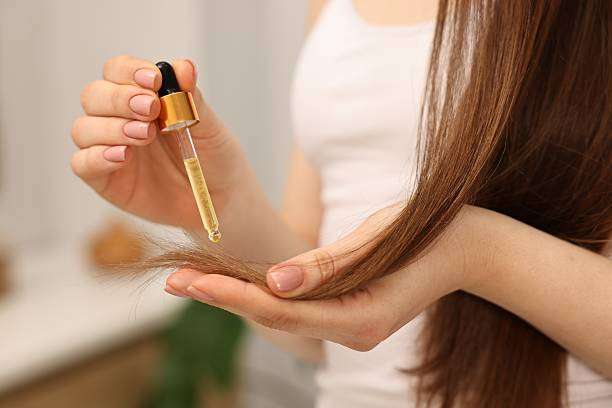
Daily maintenance and nutritional supplements
Long-term hair care after dyeing requires more than just a single application of hair oil ; it necessitates developing a scientific daily maintenance routine.
Regular use of hair oil for deep nourishment replenishes moisture, lipids, and vitamins, improving hair cuticle structure, strengthening hair strands, and prolonging the color’s stability.
Combining it with hair serums, leave-in conditioners, or regular hair masks creates a synergistic effect between hair oil and other hair care products, ensuring dyed hair remains healthy and shiny in daily life.
Daily hair care also requires attention to lifestyle details, such as avoiding prolonged sun exposure, reducing high-temperature styling, controlling the frequency of shampooing, and proper hair combing.
Hair oil in daily care not only nourishes but also protects and repairs, providing continuous support to hair during the vulnerable period after dyeing.
Scientific daily care and nutritional supplementation can help dyed hair maintain its shine, smoothness, and health over long-term use, thus achieving a dual guarantee of dyeing results and hair quality.
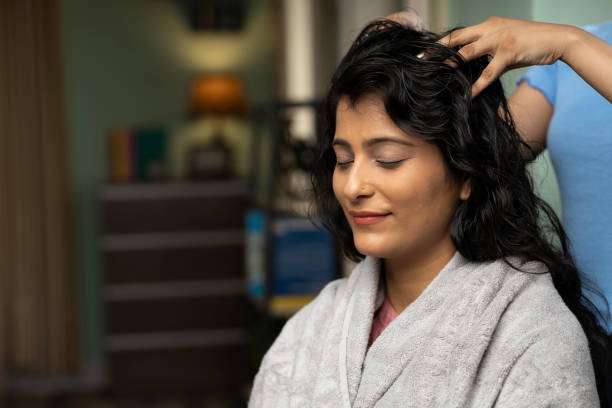
Comprehensive post-dyeing hair care strategy
Combining the five key points above, post-dye hair care forms a complete closed loop: Immediate nourishment after dyeing provides initial protection for the hair strands; regular shampooing and conditioning combined with hair oil locks in the color and maintains moisture; pre-styling protection strategies reduce heat damage; and daily maintenance and nutritional supplementation ensure long-term health.
By using hair oil scientifically , dyed hair not only retains its color and shine but also reduces dryness, frizz, and breakage, achieving an ideal state that balances beauty and health.
Hair oil plays a central role in post-dyeing hair care.
Its natural lipids and vitamins can penetrate the hair cuticle, repairing the micro-damage caused by dyeing and forming a protective film to delay color fading.
Combined with scientific washing, styling, and daily maintenance strategies, it can achieve comprehensive post-dyeing hair care, making the dyeing effect last longer and improving hair health.
FAQ
How long after dyeing can I use hair oil?
You can use hair oil within 24 hours after dyeing for immediate nourishment; this is a crucial period for locking in color and protecting your hair. Afterward, you can use it daily or every other day as needed, in conjunction with your regular shampooing, conditioning, and styling routine.
What type of hair oil is best for locking in color after dyeing?
Shea butter, argan oil, and amla oil are the top choices for locking in color after dyeing. They are rich in fatty acids and vitamins, which can nourish hair strands, repair hair cuticles, and form a protective film to delay color fading.
How to control the amount of hair oil used before hot styling?
The amount applied should be moderate, enough to cover the mid-lengths to the ends of the hair to form a protective film. Avoid direct contact with the scalp or excessive buildup, as this can make the hair oily and affect the styling effect.